Being Prepared For Emergencies
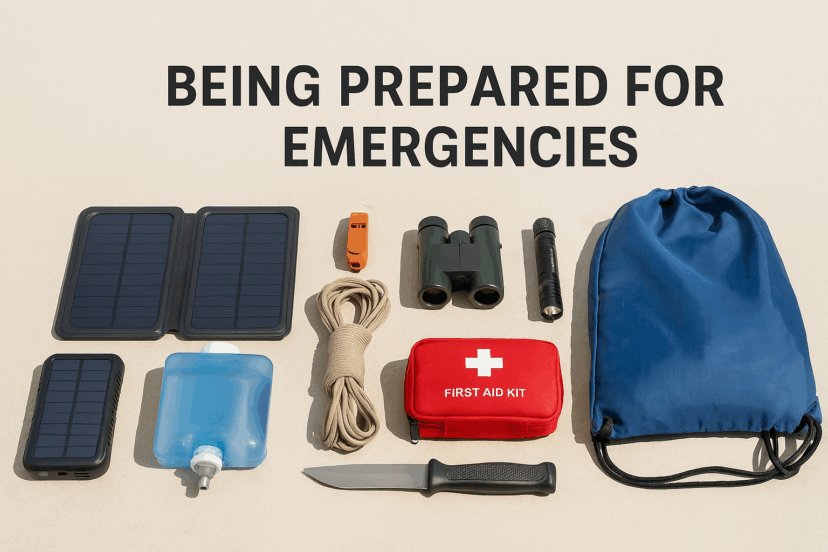
Being Prepared for Emergencies: A Practical, Calm Plan for Real Life
Preparedness does not have to look extreme to be effective. For most households, the real goal is much simpler: reduce stress, protect the people you care about, and keep your options open when something disrupts normal life. Maybe a storm knocks out power. In another situation, roads flood. At other times, a winter freeze keeps you home, or supply delays leave shelves thin. None of those events require panic. They require a calm plan, a few key supplies, and enough structure that you are not making every decision from scratch in the middle of stress.
If you want a practical, layered approach that works for renters, homeowners, apartment dwellers, families, and solo households, this guide will help you build it. It also connects directly to your 72-hour checklist, your gear hub, and your deeper guides on water storage, food storage, and emergency radios.
Fast track: Start with the checklist, then price-check the essentials in the gear hub. That gives you the fastest path to a calmer, more reliable emergency setup.
Disclosure: As an Amazon Associate, SurvivalTactix earns from qualifying purchases. Some links may also be affiliate links (EcoFlow, Jackery, Survival Frog). This supports the site at no extra cost to you.
Preparedness information is for general education. Follow local laws and manufacturer instructions. For medical or emergency decisions, follow official local guidance.
Jump to: Start here • Quick decide • Why prepare • 72-hour foundation • Build in layers • Family plan • Budget build order • Starter essentials • Mistakes to avoid • Resources • FAQ
Start here: preparedness is about margin, not fear
Preparedness is not fear; it is margin. In practice, that margin means you are not forced into rushed decisions when stores are crowded, the power is out, information is confusing, or you suddenly need to shelter at home for a few days. Most emergencies are not movie scenarios. They are ordinary disruptions with extraordinary inconvenience: severe weather, short-term blackouts, boil-water advisories, local flooding, wildfire smoke, winter storms, supply delays, and situations where you simply cannot leave home safely.
That is why the best-prepared households are usually not the ones with the most gear. Rather, they are the ones with the clearest system. They know where the water is, how they will get updates, and what to do in the first hour. Just as importantly, they are not depending on one device, one charger, or one last-minute store run.
Quick decide: what should you do first?
If you want the shortest possible answer, do these five things first:
- Store at least 72 hours of water
- Add reliable light and spare batteries
- Add a way to receive updates, ideally an emergency radio
- Build a simple food layer you will actually eat
- Write down a one-page family communication plan
If you do only that, you are already much harder to rattle than the average household when something goes wrong. In other words, a simple system beats last-minute scrambling.
| Best move | What it solves | Why it matters |
|---|---|---|
| Start with 72 hours | Water, light, food, updates, first aid | Covers the most common short-term disruptions |
| Write a household plan | Confusion, missed communication, wasted time | Improves decisions when stress is high |
| Build in layers | Overspending and random gear buying | Makes preparedness sustainable and realistic |
Why emergency preparedness still matters
Official emergency-preparedness guidance in both the U.S. and Canada still centers on the same practical principles: build an emergency kit, make a plan, and be ready to get by on your own for several days. In Canada, emergency-kit guidance still emphasizes being self-sufficient for at least 72 hours, and Public Safety Canada continues to recommend a household emergency plan and a portable, accessible emergency kit. Helpful official references include Ready.gov’s Build a Kit guidance, Get prepared, and Canada’s emergency kit guidance.
That consistency matters because it shows preparedness is not fringe thinking; rather, it is mainstream risk reduction. So you do not have to guess whether water, light, communication, food, and a plan still matter. They do.
The 72-hour foundation: what actually matters first
If you only build one layer, build 72 hours first. That baseline covers the most common disruptions: outages, severe storms, winter weather, temporary supply issues, short evacuations, and the very normal situation of simply not being able to leave home easily for a few days.
The first 72 hours should solve five priorities in roughly this order:
- Water
- Information and communication
- Light and basic power
- Food
- Medical, hygiene, and sanitation basics
1) Water
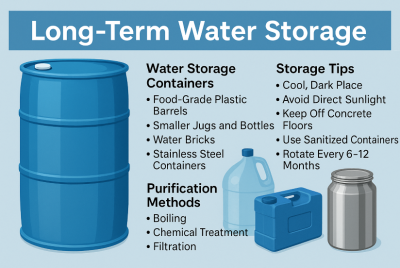
Water is the first preparedness problem because everything becomes harder without it. Drinking, cooking, medications, sanitation, and basic comfort all get more difficult fast. For most households, commercially bottled water works well, while food-grade containers are a solid upgrade. The point is not perfection. The point is immediate resilience. If you want to build beyond the first three days, see Long-Term Water Storage: Essential Survival Guide.
2) Information and communication
When phones are low, networks are congested, or power is unreliable, information becomes a survival multiplier. A simple radio gives you updates when apps and group texts are not enough. Just as importantly, pair it with a written contact list and a short household plan.
This is one reason a practical emergency radio remains such a high-value item.For Canadian readers, official weather alerts, WeatherCAN, and local alerts should be part of that information layer as well.
3) Light and basic power
Darkness creates friction immediately. Flashlights, headlamps, spare batteries, and a charged power bank solve a surprising amount of early stress. You do not need to overbuild this; instead, you need enough light to move safely, check on people, and handle essential tasks.
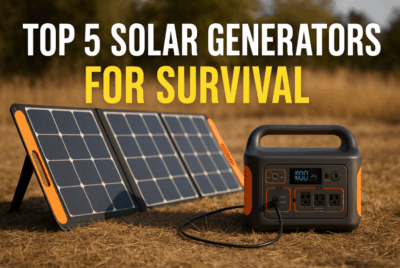
For households with frequent outages, winter conditions, or medical-device concerns, a portable power station or solar generator becomes the upgrade path.4) Food
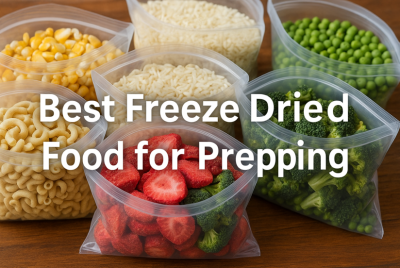
Emergency food should first be familiar, simple, and low-effort. Start with foods your household will actually eat: soups, rice, pasta, oats, canned proteins, nut butters, crackers, easy comfort foods, and shelf-stable basics. Then, once your 72-hour layer is stable, you can start building a deeper pantry using Long-Term Food Storage for Emergencies and Preppers.
5) Medical, hygiene, and sanitation basics
The point here is not to turn your house into a clinic. Instead, it is to reduce avoidable problems. A practical first-aid kit, prescription medications, hygiene supplies, gloves, wipes, soap, feminine hygiene products, backup glasses, and sanitation basics matter far more than gimmicky items. Keep this category practical, proven, and specific to your household.
Build in layers: 72 hours, 7 days, 30 days, then deeper
A lot of preparedness frustration comes from trying to solve everything at once. Instead, the cleaner approach is layered.
- Layer 1: 72 hours — water, food, light, updates, first aid, plan
- Layer 2: 7 days — deeper pantry, more water, more batteries, better backup charging
- Layer 3: 30 days — stronger food storage, better organization, seasonal upgrades
- Layer 4: Long-term resilience — power stations, deeper food storage, improved redundancy
This approach lowers overwhelm and keeps you from buying random gear without a system. As a result, it also helps you spend in the right order.
Mid-article upgrade: backup power for longer outages
If your area sees frequent blackouts, winter storms, or longer utility disruptions, portable power stations are the cleanest upgrade path for phones, radios, lighting, and other small essentials.
The family plan most people skip
Preparedness is not just supplies; it is decisions made in advance. A simple household plan can fit on one page, and it will often do more for your actual response than another random purchase.
Your plan should answer:
- Are we staying or leaving?
- What hazards matter most where we live?
- Where do we meet if separated?
- Who is our out-of-area contact?
- What is our backup if phones fail?
- Where are our important documents, keys, medications, and chargers?
Public Safety Canada’s emergency-plan form is useful if you want an official framework to fill out and print: make an emergency plan.
5-sentence household plan
- Everyone check in — are you safe?
- We are staying / evacuating because __________
- If separated, meet here: __________
- Out-of-area contact: __________
- Tonight we focus on: water, warmth, information, and light
A smart budget build order
If your budget is limited, buy in this order. That way, each purchase actually strengthens the system instead of adding clutter:
- Water
- Flashlights or headlamps
- Emergency radio
- Food you already eat
- Power bank
- First aid and hygiene
- Seasonal upgrades for your region
- Larger backup power if needed
That order keeps your spending practical and your setup usable. At the same time, it also lines up with low-cost preparedness guidance that emphasizes building gradually with what you already have and improving the system over time. Ready.gov’s low- and no-cost preparedness page is worth seeing if you are trying to start on a tight budget.
Quick price-check: starter essentials
- 72-hour kits: Check price (US) • Check price (Canada)
- Emergency radios: US • Canada • Survival Frog (US)
- First aid kits: US • Canada • Survival Frog (US)
- Water storage containers: US • Canada
- Headlamps: US • Canada
Common mistakes that waste money and weaken readiness
- Buying random gear without a system: a pile of products is not the same thing as preparedness
- Ignoring water: people often buy food first because it feels more visible, but water is more urgent
- Depending on one device: one phone, one charger, one app, or one information source is not resilience
- Buying overly specialized items too early: start with common, proven basics before niche gear
- Skipping practice: test the flashlight, turn on the radio, rotate batteries, and confirm the plan
A small, consistent system beats a big pile of equipment you do not know how to use. That is also why your internal setup should stay simple: one shelf, one bin, one written card, and one repeatable routine.
Trusted resources and related guides
Trusted external resources
- Ready.gov — Build a Kit
- Ready.gov — Low and No Cost Preparedness
- American Red Cross — Survival Kit Supplies
- Government of Canada — Get prepared
- Government of Canada — Emergency kits
Related SurvivalTactix guides
Calm + Courage: You do not need to “finish preparedness” this week. One shelf of water, one radio, one written plan, one week of better food storage — that is how real resilience gets built. Small upgrades compound, and the future version of you will feel the difference.
FAQ
What is the first thing I should buy for emergency preparedness?
Start with water and a reliable light source. Then add a radio and simple food.
Is preparedness expensive?
No. It does not have to be. In fact, a steady, layered approach beats emotional spending and oversized first purchases.
Should most people prepare to shelter in place or evacuate?
Most events begin as shelter-in-place situations. However, evacuation is for specific hazards such as wildfire, rising floodwater, or official orders.
Do I need a complete survival kit on day one?
No. First build your 72-hour foundation, then expand category by category.
Where should I store supplies?
Keep the most important items easy to reach. Then store deeper backups in cool, dry, organized spaces.
Next step
Start with the checklist and then price-check the essentials in the gear hub. That gives you the fastest path to a calmer, more reliable emergency setup.