Best Solar Generators for Survival: Off-Grid Power You Can Trust
Best Solar Generators for Survival: Off-Grid Power You Can Trust
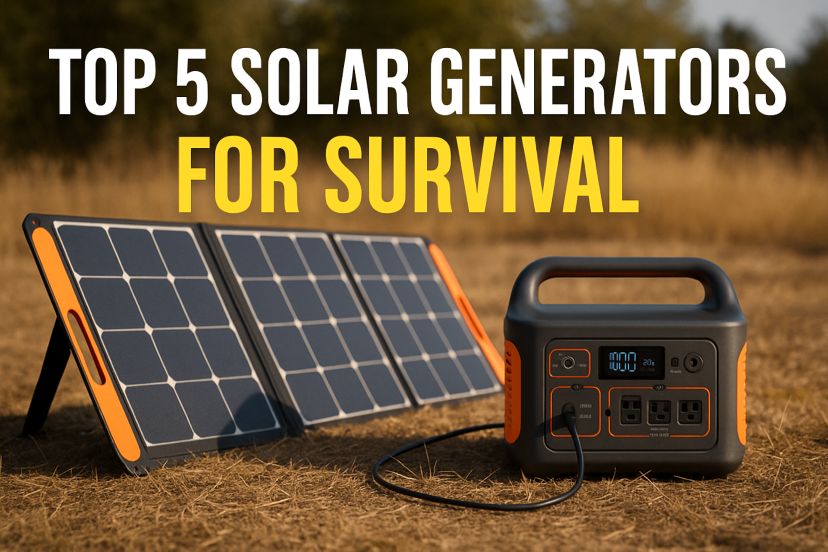
A good solar generator can turn a stressful outage into a manageable inconvenience. When the grid goes down, the right battery power station can keep phones charged, radios running, lights on, routers online, and in some cases even refrigerators, CPAP machines, or small appliances working long enough to buy you time. That is why solar generators have become one of the most practical upgrades for real-world preparedness.
If you want a calm, survival-minded buying guide instead of hype, this page will help you choose the right size, avoid the common mistakes, and match the right power class to your situation. For the broader preparedness picture, connect this guide with Being Prepared for Emergencies, your Emergency Radio guide, and your 72-hour gear hub.
Fast track: If you want the shortest answer, match the battery size to the job. Small units cover phones, lights, and radios. Mid-size units handle routers, laptops, CPAPs, and longer outages. Larger units are where fridge backup and serious home resilience begin.
Disclosure: As an Amazon Associate, SurvivalTactix earns from qualifying purchases. Some links may also be affiliate links (EcoFlow, Jackery, Survival Frog). This supports the site at no extra cost to you.
Preparedness information is for general education. Follow manufacturer instructions, local electrical rules, and official safety guidance.
Quick answer: what should most people buy?
For most households, the sweet spot is not the smallest power station and not the biggest one. It is the size class that matches the loads you actually care about. If your real goal is phones, lights, radio, and Wi-Fi, you do not need an oversized unit. If your real goal is refrigerator backup, medical-device support, or longer outages, you will likely need to move up into a much larger battery class.
That is the core buying rule: size for your actual emergency priorities, not for marketing claims.
Best for: the fastest way to decide
This section is built to help you choose quickly. These are not rigid model claims. Instead, they are the most useful solar-generator classes for the most common preparedness situations.
| Best fit | Power class | What it can realistically handle | Best shopping path |
|---|---|---|---|
| Best for phones, lights, radios, and short outages | 300–600Wh class | Phones, power banks, LED lighting, radios, small electronics | Amazon US • Amazon Canada |
| Best for apartment backup, routers, laptops, and CPAP-class needs | 1000–1500Wh class | Wi-Fi, laptops, work-from-home gear, CPAP support, longer essential-device runtime | Jackery (US) • Amazon US • Amazon Canada |
| Best for fridge backup and multi-day outages | 2000Wh+ class | Fridge cycles, more serious outage coverage, heavier essential loads | EcoFlow (US) • Jackery (US) • Amazon US |
| Best for serious home backup and bigger appliances | Expandable / home-backup class | Larger appliance loads, longer-duration backup, more robust household resilience | EcoFlow (US) • Jackery (US) |
What a solar generator really is
Most people use the phrase “solar generator” to mean a portable battery power station that can be recharged by solar panels. In practice, that means you are usually buying two related things: a power station and, optionally or additionally, solar panels. The battery power station is the core system. The solar input is the charging path that makes it more resilient during longer outages or off-grid use.
That distinction matters because a lot of people imagine solar alone will do all the work. In reality, the battery size, inverter strength, recharge speed, and the loads you plan to run matter just as much.
Battery power stations are also different from gas generators. Official power-outage guidance still warns that fuel generators must be used outdoors and well away from the home because of carbon monoxide, electrocution, and fire risks. Helpful official references include Ready.gov power outage guidance, FEMA generator safety, and American Red Cross generator safety.
That does not make battery systems magical. They still have limits. However, they avoid the engine-exhaust problem that makes gas-generator safety so serious. Both EcoFlow and Jackery describe their portable battery stations as battery-powered, fume-free alternatives intended for indoor-compatible backup use when used as directed. See EcoFlow portable power stations and Jackery portable power stations.
How big of a solar generator do you need?
The fastest way to choose the right size is to work backward from the loads that matter most in an outage. Ask yourself three questions:
- What must stay powered first?
- For how long?
- Do I need light-duty convenience or serious home backup?
As a practical rule, think in terms of watt-hours for runtime and watts for whether the unit can actually start and run the device.
Simple sizing guide
- 300–600Wh: phones, radios, small lights, small electronics
- 1000–1500Wh: laptops, routers, work gear, CPAP-class needs, stronger essential-device coverage
- 2000Wh+: fridge backup, longer outages, heavier essential loads
- Expandable / home-backup systems: bigger appliance loads, more serious home resilience, longer duration
If you want a cleaner buying experience, start by sizing for your top priority. For many people, that priority is not “run everything.” It is “keep the essentials alive.”
What to look for in a survival-ready solar generator
1) Battery size that matches the job
More capacity is not always better if the unit becomes too expensive, too heavy, or too underused. The real goal is fit. Buy the smallest class that truly covers your real outage priorities, then move up only if your needs justify it.
2) Inverter strength and surge headroom
A power station may have enough battery capacity but still fail the job if the inverter is too weak for the device’s startup demand. This matters especially for refrigerators, pumps, tools, and similar loads.
3) Solar input and recharge flexibility
If you are buying for real preparedness and not just camping convenience, recharge flexibility matters. Good systems can usually recharge by wall outlet, solar, and often vehicle charging as well. Solar becomes especially valuable when outages last longer than expected.
4) Battery chemistry and long-term reliability
Battery chemistry matters because it affects lifespan, durability, and long-term value. Many current mid- to large-size portable stations now use LFP / LiFePO4 battery chemistry, which is widely favored for longevity and preparedness use. EcoFlow and Jackery both market long-life LFP-based options across major parts of their current lineups. See EcoFlow portable power stations and Jackery portable power stations.
5) Port layout and real usability
Look beyond headline specs. In an actual outage, practical usability matters: how many AC outlets you get, what USB outputs are available, whether the screen is readable, whether the unit is too heavy to move easily, and whether the interface makes sense when you are tired and stressed.
EcoFlow vs Jackery: which buying path makes more sense?
Both brands make strong portable power options, but they often appeal to slightly different buyers.
EcoFlow path
EcoFlow is a strong path if you want more serious home-backup ambition, faster-scaling systems, or larger-capacity options inside a broader backup ecosystem. Their current DELTA line emphasizes home-backup positioning, cleaner indoor-friendly battery power, and expandable systems. Official collection: EcoFlow portable power stations.
Jackery path
Jackery is a strong path if you want an easier-to-understand lineup, lighter portable options, or a simpler entry point into emergency backup and solar charging. Their Explorer and home-backup lines cover everything from smaller device charging to larger outage support. Official collection: Jackery portable power stations.
Direct brand shopping (U.S.)
If you already know you want a direct-brand option instead of a marketplace search, start here.
Canadian readers: use the Amazon Canada fallback section below to compare local availability and pricing.
Amazon fallback: easiest way to compare by size class
Amazon is still useful here, especially for Canadian readers and for quick comparison by capacity class. This is also the easiest way to compare multiple brands side by side if you are still deciding what size makes sense.
Quick price-check by size class
- 500Wh class: Amazon US • Amazon Canada
- 1000Wh class: Amazon US • Amazon Canada
- 1500Wh class: Amazon US • Amazon Canada
- 2000Wh+ class: Amazon US • Amazon Canada
- Solar panels for charging: Amazon US • Amazon Canada
Common solar-generator mistakes to avoid
- Buying by hype instead of load priority: size for what must stay powered first
- Ignoring inverter limits: battery size alone does not guarantee the unit can start your device
- Assuming solar alone solves everything: panel input, sun conditions, and battery size still matter
- Forgetting portability: a bigger unit is not better if you cannot move or use it comfortably
- Skipping outage planning: the best power station still works better when paired with your checklist, radio plan, and lighting setup
A solar generator is strongest when it is one part of a broader resilience system. That is why it should connect to your lighting, food, water, information, and household plan rather than sitting on a shelf as an isolated gadget.
Trusted resources and related guides
Trusted external resources
- Ready.gov — Power outages
- FEMA — Generator safety
- American Red Cross — Safe generator use
- Canadian Red Cross — Power outages
- Government of Canada — Prepare for power outages
Related SurvivalTactix guides
Calm + Courage: You do not need to power your entire house on day one. If your solar generator can keep your communication, lighting, and a few critical essentials running, you have already changed the experience of an outage in a meaningful way. Small layers compound.
FAQ
What size solar generator is enough for most people?
For many households, the right answer is a mid-size unit that can handle phones, lights, Wi-Fi, laptops, and other essentials. Fridge backup and heavier loads usually push you into a much larger class.
Can a solar generator run a refrigerator?
Yes, many larger portable power stations can support refrigerator backup, but runtime and startup demands vary. That is why battery size and inverter capability both matter.
Is a solar generator safer indoors than a gas generator?
Battery power stations avoid engine exhaust and carbon monoxide from fuel-burning generators, but you should still follow the manufacturer’s instructions and use them responsibly.
Should I buy solar panels at the same time?
If you are buying for real preparedness and longer outages, adding solar charging capability makes sense. If your primary goal is short outage coverage, you may start with the battery station first and add panels later.
What is the simplest solar-generator setup that works?
A portable power station sized for your core essentials, one practical recharge path, and a clear list of priority devices. That is enough to create real resilience without overcomplicating the purchase.
Next step
Choose the power class that fits your real outage priorities, then compare EcoFlow, Jackery, and Amazon options without overbuying.
Canadian readers: compare portable power stations on Amazon Canada