Vehicle Emergency Kit: What Every Car Needs for Breakdowns, Accidents & Roadside Emergencies
Quick answer: A solid vehicle emergency kit covers five jobs: get you seen (triangle/flares), get you moving again (jump starter, tire tools), keep you safe until help arrives (first aid, escape tool), keep you comfortable (water, blanket, layers), and keep you connected (charged phone, backup power). Build it once, check it twice a year.
Disclosure: This article may contain affiliate links (Amazon, EcoFlow, Jackery). If you buy through these links, SurvivalTactix may earn a commission at no extra cost to you. We only recommend products that fit the preparedness scenario and reader need. As an Amazon Associate, SurvivalTactix earns from qualifying purchases.
Watch: The Vehicle Emergency Kit Every Driver Needs
Vehicle Emergency Kit: What Every Car Needs for Breakdowns, Accidents & Roadside Emergencies
Most households have a 72-hour kit at home and assume that covers them. It doesn’t: your car spends hours a week somewhere your home kit can’t reach. A dead battery in a grocery store parking lot, a blown tire on a rural highway, a fender-bender at night on an unlit road: these are the moments a vehicle-specific kit earns its space in the trunk. It doesn’t need to be complicated or expensive. It needs to be there, and it needs to work. If you have not built the home version yet, start with our 72-hour emergency checklist, then use this guide to cover the car.
Why Does Every Car Need Its Own Emergency Kit?
Your vehicle is a separate environment from your home: different temperature swings, different access to your gear, different timing of when something can go wrong. A kit built for your house doesn’t help if you’re stranded thirty minutes from home. Building a small, dedicated kit for the car closes that gap.
What Should Be in a Vehicle Emergency Kit?
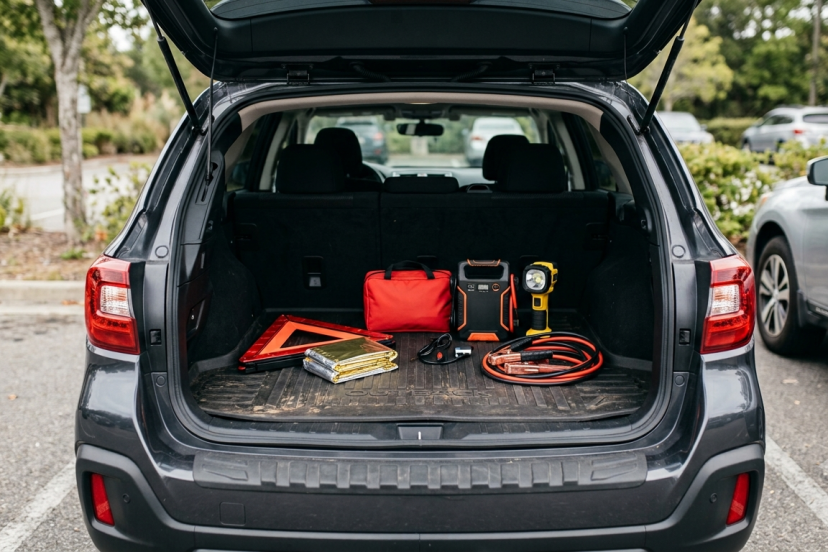
Think of the kit in five functional categories rather than a random gear list. Every item should answer one of these five questions: Can people see me? Can I get moving again? Can I stay safe until help arrives? Can I stay comfortable? Can I stay connected?
1. Visibility and Signaling: Can People See Me?
Reflective warning triangles or road flares, a high-visibility vest, and a flashlight or headlamp with extra batteries. This category matters most and gets skipped most: a disabled car on a shoulder at night is genuinely dangerous, and visibility gear is the cheapest, highest-leverage item in the whole kit.
Light for the shoulder at night
A rechargeable headlamp 2-pack gives the driver and a passenger a light with both hands free.
2. Getting Moving Again: Can I Fix This Myself?
A portable jump starter (not just jumper cables: a battery-powered jump starter means you don’t need a second car), a tire inflator or plug kit for slow leaks, a basic tool kit, and a tow strap. Portable jump starters have gotten dramatically smaller and more reliable in the last few years: the same brands behind home backup power (EcoFlow and Jackery) now make dedicated automotive jump-starter units, which is a natural pairing if you already trust either brand from a home-backup purchase.
Restart a dead battery without a second car
The NOCO Boost GB20 is a 500-amp lithium jump starter with a built-in power bank for phones.
3. Staying Safe Until Help Arrives: What if I’m Hurt or Stuck?
A compact first aid kit, a seatbelt cutter/window-breaker tool (cheap, and the single item most likely to matter in a genuine emergency), work gloves, and a whistle. If you’re carrying kids, add a pediatric-sized first aid supplement. Owning the kit is half the job, and our emergency training and certification guide shows how to learn to use it.
A way out if you are stuck
The resqme tool combines a seat belt cutter and a car window breaker and clips to a key ring.
Warmth for everyone in the car
A 10-pack of Mylar emergency blankets, 84 by 52 inches, so there is one for each passenger.
4. Staying Comfortable: What if I’m Waiting a While?
A compact blanket (or emergency thermal blanket for trunk storage), a poncho, extra layers appropriate to your climate, and non-perishable snacks plus a few bottles of water. Comfort items are what turn a stressful two-hour wait for a tow truck into a manageable one, especially with kids in the car. If your winters are harsh, our cold weather survival guide goes deeper on staying warm.
5. Staying Connected: Can I Call for Help and Keep My Phone Alive?
A car phone charger, a small portable power bank (separate from the jump starter: you don’t want to drain your jump-start battery texting for two hours), and a paper map or printed route as backup for dead-zone areas. Cell service gaps are more common on rural highways than most drivers expect.
Keep your phone alive
A 20,000mAh Anker power bank with a built-in USB-C cable keeps your phone charged while you wait for help.
Quick Picks by Category
| Category | What to Get | Shop |
|---|---|---|
| Visibility | Reflective warning triangle kit | Check on Amazon | Shop Canada |
| Jump Starter | Portable battery jump starter | Check on Amazon | Shop Canada |
| Safety Tool | Seatbelt cutter / window breaker | Check on Amazon | Shop Canada |
| First Aid | Compact car first aid kit | Check on Amazon | Shop Canada |
| Comfort | Emergency thermal blanket | Check on Amazon | Shop Canada |
Needs Review: links above go to Amazon search results rather than specific named products, since no live product research was done for this article. Swap in specific ASINs/products once reviewed: specific products convert better than search links.
How Do You Handle a Breakdown Safely?
Gear only helps if you use it in the right order. If your car stops working on a road:
- Get off the roadway if you can. Even a partial shoulder is safer than a live lane. Signal early and move deliberately: don’t panic-brake into the breakdown lane.
- Turn on hazards immediately, then place your warning triangle or flares well behind the vehicle, roughly 100 feet on a highway, so approaching traffic has time to react.
- Stay inside the vehicle with your seatbelt on if you’re on a highway shoulder. It’s counterintuitive, but standing outside next to fast-moving traffic is one of the most dangerous places to be during a roadside emergency. Exit on the side away from traffic if you must get out.
- Call for help before you troubleshoot. Roadside assistance, a tow service, or 911 for anything involving injury or an unsafe location: get the call started, then deal with the mechanical problem while you wait if it’s safe to do so.
- Use your visibility gear even in daylight. Reduced visibility isn’t just a nighttime problem: fog, rain, and glare cause daytime roadside collisions too.
Do Summer and Winter Kits Need to Be Different?
Yes, and this is where most kits fall short: people build one kit and never revisit it. Swap or supplement twice a year.
Summer Additions
Extra water (heat exhaustion risk climbs fast in a disabled vehicle), a sunshade, and a check on tire pressure since hot pavement accelerates blowout risk on already-worn tires.
Winter Additions
A small folding shovel, sand or cat litter for tire traction, a proper winter blanket or sleeping bag rated for vehicle-idle-off conditions, hand warmers, and a full tank policy (never let the tank drop below a quarter in freezing weather: it reduces both range and condensation risk in the fuel line). The NHTSA winter driving checklist covers the rest: lights, wipers, coolant, and tire tread, all worth checking before the first cold snap. The at-home version of the same problem is covered in our winter storm power outage guide.
Set a calendar reminder for the swap. A kit that’s never checked quietly turns into dead batteries and expired snacks: worse than no kit, because it creates false confidence.
Hand warmers for the glove box
Open the package and they heat up, so you can keep a few in a coat pocket or the glove box.
How Much Should a Vehicle Emergency Kit Cost?
Needs Review, cost estimate: a reasonable starter kit built from individual pieces typically lands in the $60–$150 range depending on how much you already own. Pre-assembled kits are a faster starting point and usually run somewhere in that same range or slightly above, though quality varies: check what’s actually inside, not just the box copy, before buying a bundled kit.
If you want to phase it in, start with visibility and first aid (cheapest, highest safety return), then add the jump starter and tire tools next.
Build Your Own or Buy a Pre-Assembled Kit?
Both work. A pre-assembled kit is the faster path if you want this done this weekend: you’re paying for someone else’s time, not necessarily better gear. Building your own lets you size each category to your actual driving (a family doing long highway hauls needs more comfort/water than someone doing a 15-minute city commute) and usually costs less if you’re patient about sourcing. Neither choice is wrong; the only actual mistake is having no kit at all.
Where Should the Kit Live, and How Do You Keep It Ready?
Storage location matters more than people expect. A few habits make the difference between a kit that’s actually useful and one that’s just taking up space:
- Use a dedicated bag or bin, not loose items rolling around the trunk.
- Keep the first aid kit and seatbelt cutter within easy reach of the driver’s seat, not buried under everything else.
- Check batteries and the jump starter’s charge level on your seasonal swap, not just the day you buy it.
- Rotate food and water the same way you would a home emergency kit.
- Tell everyone who drives the car where the kit is and what’s in it.
What Mistakes Do Most Drivers Make With Their Car Kit?
The most common mistake isn’t a missing item: it’s an item that quietly stopped working. A first aid kit with expired ointment, a flashlight with corroded batteries, a jump starter that’s been dead for eight months. The second most common mistake is treating the kit as a one-time purchase instead of something to check twice a year. The third is skipping visibility gear because it feels less “useful” than tools: until the moment it’s the only thing standing between a breakdown and a second collision.
You don’t need to build the “perfect” kit today. Most people who never get around to this are waiting for a free weekend to do it all at once, and that weekend keeps not arriving. Start with one bag, three items (triangle, first aid kit, phone charger), and add to it over the next month. A partial kit in your trunk today beats a complete one you’re still planning to build next year. This is one of the lowest-effort, highest-peace-of-mind projects in all of preparedness: most of it fits in a single tote bag.
Frequently Asked Questions
What’s the single most important item in a vehicle emergency kit?
A reflective warning triangle or flares. Getting seen by other drivers prevents the second, often worse, accident that happens when a stopped car goes unnoticed.
Do I need a portable jump starter if I already have jumper cables?
Jumper cables require a second working vehicle to help you: a portable jump starter doesn’t. If you drive alone often or in low-traffic areas, a jump starter is the more reliable option.
Should I keep a first aid kit in the car if I already have one at home?
Yes. A car-specific kit needs to survive temperature swings and stay accessible without going inside your house first: keep them separate.
Is it safe to stay in my car during a roadside breakdown?
Generally yes, especially on a highway shoulder: staying belted inside is safer than standing near live traffic. Exit only if there’s a specific hazard (fire, smoke, an unsafe location) and always exit away from traffic. Ready.gov’s car safety guidance backs this up: staying with a stopped or disabled vehicle is generally safer than leaving it, especially on higher-speed roads.
How often should I check or refresh my vehicle emergency kit?
Twice a year, ideally at the spring and fall seasonal changes, to swap climate-specific items and replace expired food, water, or batteries.
Can I use my home backup power station as my car jump starter?
Not directly: home power stations aren’t designed for automotive jump-starting. Use a dedicated portable jump starter for the car; keep the home unit for household backup power.
Building Real Readiness, One Step at a Time
Start with the three cheapest, highest-impact items: a reflective triangle, a compact first aid kit, and a phone charger, and build from there over the next month. If you already have backup power gear at home, check whether your EcoFlow or Jackery ecosystem has a companion jump-starter unit worth pairing with it. Pair this kit with our 72-Hour Emergency Kit Gear Hub for full household coverage, on the road and at home.
Preparedness information is for general education. Follow manufacturer instructions and local traffic/safety laws.
Sources referenced: NHTSA Winter Driving Tips · Ready.gov Car Safety
A Word of Encouragement
A car kit is one of the easiest wins in all of preparedness, because it lives in the boot and asks nothing of you until the day it matters. You don’t need every item here at once. Add a light, some water, and a way to jump-start the battery, and you’ve already covered the breakdowns most drivers actually experience.