How Much Cash Should You Keep at Home for Emergencies?
Fast track
Short on time? Jump straight to the number, or straight to where it should live.
Quick Answer: Most households are fine keeping enough small-bill cash at home to cover a few days of bare necessities, somewhere between a few hundred dollars and roughly two months of essential costs, in a fireproof, waterproof, locked container that is not a secret from every adult in the house. It is a backup for when cards and ATMs stop working, not a replacement for savings.
J.T. Wilder | Survival strategist, Survival Tactix | Last updated: October 12, 2026
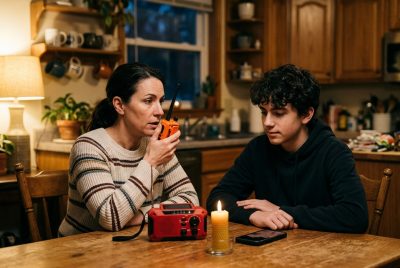
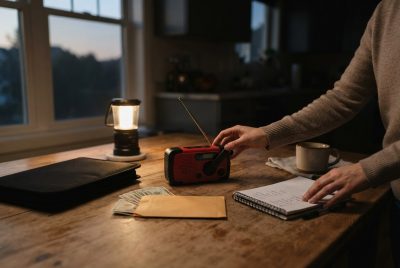
When Hilltop National Bank in Casper, Wyoming took its systems offline on September 8, 2026 after what it called a "cybersecurity incident," online and mobile banking stayed down for almost two weeks, and for the first few days debit cards were capped at $1,000 a day at stores and ATMs. Nobody in that town planned for it. The households that weathered it most calmly were the ones who already had a little cash set aside at home, not because they expected a crisis, but because it is a sound, boring habit either way.
This guide covers the actual question people ask once they decide cash is a good idea: how much, in what bills, and where it should physically live so it helps you instead of becoming its own problem.
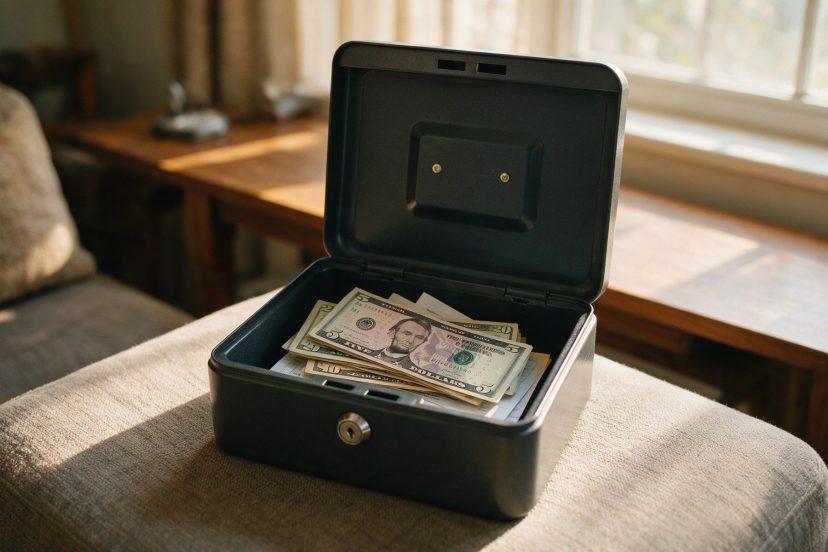
A small fireproof lockbox is the first thing most households are missing, and it solves the storage half of this question before you even decide on an amount. See the SentrySafe fireproof lockbox (US) or, for Canadian readers, the same lockbox on amazon.ca.
Disclosure: This article may contain affiliate links. If you buy through these links, SurvivalTactix may earn a commission at no extra cost to you. We only recommend products that fit the scenario and the reader’s need. This is general preparedness education, not financial advice; for decisions about your own savings, talk with a qualified financial professional.
At a glance: cash at home vs. money in the bank
| Cash at home | Money in a bank or credit union | |
|---|---|---|
| Works during a system outage | Yes, immediately | Only if cards, ATMs and apps are working |
| Insured if lost or stolen | No (homeowners/renters policies typically cover only about $200 of cash) | Yes, up to $250,000 per depositor at an FDIC- or NCUA-insured institution |
| Earns interest | No, and it loses value to inflation | Often yes, especially in savings accounts |
| Right role | A small, boring backup for the first day or two of a disruption | Where the rest of your savings should live |
How much cash should you actually keep at home?
There is no single official number, because Ready.gov and FEMA’s financial-preparedness guidance both say to keep "a small amount of cash… in small bills" without naming a figure. The most useful benchmark we’ve seen comes from Bankrate, which quotes certified financial planner Elliot Pepper of Northbrook Financial: he frames it as roughly enough to cover the bare necessities, housing, food staples, fuel and basic living costs, for about two months, which is smaller than a full emergency fund and meant only for short-term disruptions. The Bureau of Labor Statistics’ Consumer Expenditure Survey puts average monthly food and gasoline spending for a U.S. household at just under $1,000, which gives you a starting point to scale up or down for your own household size and local costs.
In practice, most SurvivalTactix households land in one of three tiers:
- Starter tier (a few hundred dollars): enough for gas, a grocery run and a meal or two out if cards stop working for a day or two.
- Household tier ($500 to $1,000): covers several days of essentials for a family, matching roughly one month of the BLS food-and-gas baseline above.
- Extended tier (up to about two months of bare necessities): Pepper’s benchmark as reported by Bankrate, usually reserved for households already comfortable with a full emergency fund and who want a cash slice of it for outage scenarios specifically.
Start at whichever tier you can actually set aside this month. A starter-tier stash you have is worth more than an extended-tier stash you keep meaning to build.
Keep It Somewhere Locked, Not a Drawer
Whatever tier you choose, it belongs in a fireproof, waterproof box with a lock, not a sock drawer. This compact SentrySafe box holds cash, a passport and a few documents and is small enough for a closet shelf.
Where should the cash actually live?
Three things have to be true at once: it has to survive a fire or a burst pipe, it has to be locked against casual theft, and every adult in the household has to know where it is and how to get to it. A stash only you know about is not a household emergency plan, it is a secret.
A small lockbox works for most homes. If you are renting, in an apartment, or want something that travels, a soft-sided fire and water resistant bag is lighter and fits in a go-bag alongside your other documents.
A Portable Option for Apartments and Go-Bags
This zippered bag is fire and water resistant and small enough to go in a 72-hour kit or a desk drawer. Good for a household that wants its cash reachable in seconds, not locked behind a key they can’t find in the dark.
Avoid the classic hiding spots. Freezers, mattresses and sock drawers are the first three places an opportunistic burglar checks, according to most basic home-security guidance, and none of them protect against fire or water damage either.
What bills should you actually keep?
Small bills, deliberately. Ready.gov’s guidance is specific on this point: keep small bills on hand, because a $100 bill is useless if the only open store has no way to make change with its registers down. A workable mix for a household-tier stash is mostly $5s, $10s and $20s, with a handful of $1s for anything small. Skip large bills entirely if you can, and skip coins, which add weight without adding much value.
What are the real risks of keeping cash at home?
Cash at home is not risk-free, and it should not replace your actual savings. The honest list: it is not insured the way a bank deposit is, so a fire, flood or theft can simply erase it; it earns no interest and loses value to inflation the longer it sits; some merchants do not accept cash at all; and because it never shows up in a bank statement, it is easy to lose track of how much you actually have. None of that makes the idea wrong, it just means the amount should be modest, deliberate, and treated as a short-term backup, not a long-term savings strategy.
Keep Documents and Cash Together, Safely
If your cash lives beside a passport, a deed or a social insurance card, a dedicated fireproof document bag rated for higher heat keeps the whole bundle protected in one place.
How do you protect it from fire, flood and theft?
A locked, fireproof, waterproof container is most of the answer. Beyond that: do not tell visitors or delivery workers where it is, do not post about your preparedness setup with identifiable details of your home, and consider splitting a larger stash between two locations (home and a safe deposit box, for example) so one bad event cannot take all of it. Photograph your home’s valuables for insurance purposes the same way you would for any other disaster plan, and keep that documentation somewhere other than right next to the cash itself.
One Box for Cash, Passport and Insurance Papers
A single fireproof lockbox is the simplest way to protect cash and the documents you would need right alongside it, in one place you can grab or point to.
What do you do with it in the first 24 hours of an outage?
Use it for what actually needs cash: gas, a grocery run, a meal if restaurants near you have gone cash-only, or a motel if you are displaced. Keep receipts where you can, since you may want them later for insurance or for reconciling your accounts once systems are back. Once your bank or card network is working again, treat the outage the same way you would any other account disruption: check statements for anything unauthorized, and call your bank on its published number, never one from a text message you received during the outage.
Calm + Courage: Preparedness can feel heavy, especially when life is already full. You do not need to do everything today. Pick one small win: check your flashlights, set aside a little extra water, or write down your family’s meetup plan. Small steps compound fast, and future-you will be grateful you started.
Shopping list: cash storage, start to finish
Frequently asked questions
How much cash should I keep at home for an emergency?
Most households start with a few hundred dollars for a day or two of essentials, and some build toward enough to cover bare necessities for up to about two months, a benchmark Bankrate attributes to certified financial planner Elliot Pepper. There is no official government figure; start with what you can realistically set aside this month.
What’s the safest way to store cash at home?
A locked, fireproof, waterproof container that every adult in the household knows about, kept somewhere other than a freezer, mattress or sock drawer.
Does homeowners or renters insurance cover cash stolen from my house?
Usually only a small amount, often around $200, far less than most households would keep. That is one more reason to keep the amount modest and treat it as a backup, not a savings account.
What bills should I keep in my emergency cash stash?
Mostly small bills, fives, tens and twenties, with a few ones. Registers and cashiers may not be able to make change for large bills during a system outage.
How is cash at home different from an emergency fund?
An emergency fund is savings, usually in a bank, meant for bigger financial shocks like job loss. Cash at home is a much smaller, physical backup for the days when cards and ATMs simply do not work.
What should I never write down or store with my cash?
Keep PINs, online banking passwords and full card numbers out of the box entirely. If someone ever finds the box, it should hand them cash, not your accounts.
Trusted resources and related guides
Trusted external resources
- Ready.gov: Financial Preparedness
- FEMA: Emergency Financial First Aid Kit (EFFAK)
- Bankrate: How Much Cash Should You Keep at Home?
Related SurvivalTactix guides
Next step
Once your cash has a locked, fireproof home, write its amount and location into your household’s offline emergency binder, so every adult in the house knows where it is without asking you.