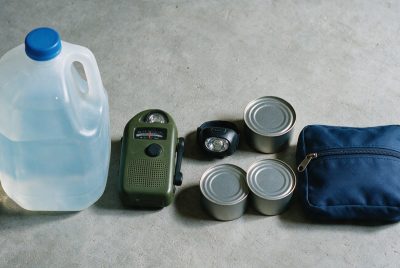
Power Outage Preparedness: Your Complete Blackout Survival Guide
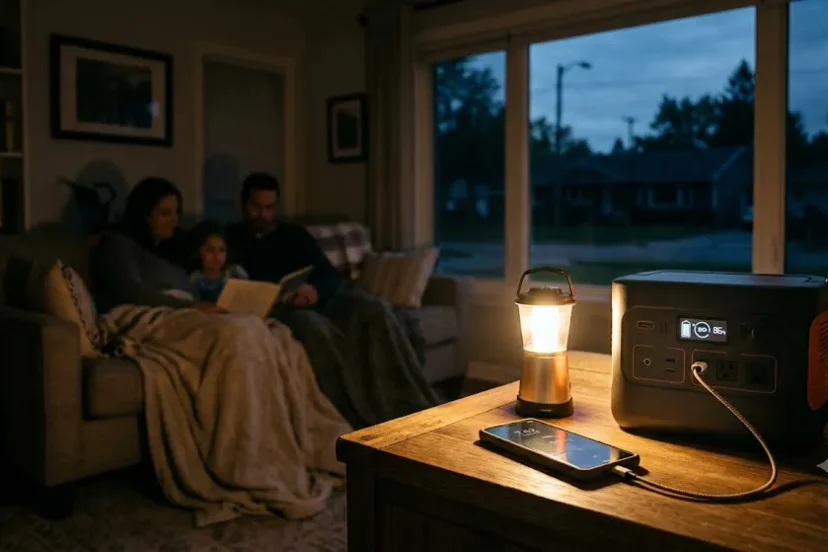
By J.T. Wilder | Survival strategist, Survival Tactix | Last updated: July 17, 2026
Power outage preparedness is one of the highest-leverage things you can do before hurricane season peaks — and it doesn’t have to take a whole weekend. This guide walks through exactly what to do, room by room, so a blackout stays an inconvenience instead of an emergency.
Quick Answer
Power outage preparedness starts with three things: store 3–7 days of water and shelf-stable food, keep flashlights and a battery or hand-crank radio charged, and invest in a portable power station or generator (never run a generator indoors). Hurricane season (June–November, peaking August–October) is the highest-risk window for multi-day outages in the US and Canada.
Want this as a printable checklist?
Get our free 72-Hour Emergency Checklist — a two-page printable PDF delivered by email, covering the essentials in a grab-and-go format.
Jump to a Section
- Why Power Outage Preparedness Matters Right Now
- The 3 Outage Types
- Food & Refrigeration: The First 4 Hours
- Backup Power: Generator vs. Portable Power Station
- Generator Safety: The Non-Negotiables
- Lighting, Communication & Medical Needs
- Apartment & Renter-Specific Blackout Plan
- Good / Better / Best Gear Picks
- Prefer a Ready-Built Kit?
- A Word of Encouragement
- FAQ
- Sources
Affiliate disclosure: Survival Tactix is reader-supported. When you buy through links on this page, we may earn a commission at no extra cost to you. We only recommend gear we’d stock in our own home. As an Amazon Associate, SurvivalTactix earns from qualifying purchases.
Why Power Outage Preparedness Matters Right Now
Atlantic hurricane season runs June 1 through November 30, but the real risk window — the stretch when storms are most likely to actually knock out power for days at a time — is mid-August through October. That’s not far off. The Department of Energy has tracked a steady rise in major US power outages over the past two decades, driven by aging grid infrastructure and more frequent severe weather. When a hurricane, tropical storm, or even a strong summer thunderstorm complex takes down power lines, restoration in hard-hit areas can take anywhere from a few hours to more than a week.
The households that come through an extended outage calmly are almost never the ones who bought a generator the day before landfall — stores sell out fast, and delivery windows disappear. They’re the ones who built a blackout plan in the quiet weeks beforehand. That’s what this guide walks you through.
The 3 Outage Types (and Why the Plan Differs)
Not every blackout calls for the same response. Knowing which one you’re in shapes your first move.
Short outage (under 4 hours). Usually a local grid issue or a fast-moving storm. Keep the fridge and freezer closed, use flashlights instead of candles, and wait it out.
Extended outage (4 hours–3 days). The most common hurricane-season scenario. This is where food safety windows, phone battery management, and a portable power source start to matter.
Prolonged outage (3+ days). Common after a direct hurricane hit or major ice storm. If a winter storm is behind the outage, our cold weather survival guide covers how to stay warm safely without running a generator indoors. This is where a generator or larger power station, a real water plan, and a way to manage medication and medical equipment become essential — not optional.
Food & Refrigeration: The First 4 Hours
A closed refrigerator keeps food safely cold for about 4 hours. A full chest freezer holds its temperature for about 48 hours (a half-full one, closer to 24). Here’s the actual sequence to follow:
- Don’t open the doors. Every open-and-close cycle cuts your safe window.
- Group perishables together in one section of the fridge so cold air stays concentrated if you do need to grab something.
- Keep a thermometer in the fridge and freezer. Once the fridge crosses 40°F (4°C) for more than 2 hours, discard perishable items — meat, dairy, eggs, and leftovers. When in doubt, throw it out.
- Have a cooler and ice or reusable ice packs ready as a backup for medications or a small amount of food if the outage runs long.
- Keep 3–7 days of shelf-stable food on hand that needs no refrigeration or cooking — this is the single biggest stress-reducer in a multi-day outage. See our full long-term food storage guide →
Backup Power: Generator vs. Portable Power Station
This is where power outage preparedness gets specific — generator or power station? This is the decision most households get wrong, not because they pick badly, but because they never actually compare the two against their real needs.
Portable power station (battery-based, e.g., EcoFlow, Jackery). Silent, safe to use indoors, zero fuel or fumes, and increasingly affordable at the mid-capacity tier. Runs a fridge, CPAP machine, phones, laptops, and lighting for a day or more depending on capacity. Recharges from a wall outlet, a car, or solar panels. The tradeoff: it can’t indefinitely power high-draw appliances like a well pump or central AC the way a fuel generator can. Check EcoFlow power stations → · Check Jackery power stations →
Fuel generator (gas, propane, or dual-fuel). Higher sustained output, can run for as long as you have fuel, and better suited to whole-home or well-pump needs. The tradeoff: noise, fumes, fuel storage and rotation, and — this is the part that costs lives every hurricane season — carbon monoxide risk if run incorrectly.
Our take: for most apartment and single-family households, a mid-capacity portable power station covers 80% of real blackout needs (fridge, phones, medical devices, lights, Wi-Fi router) with none of the fuel or CO risk. Reserve a fuel generator for households with a well pump, someone on home medical equipment requiring continuous high-draw power, or a history of outages lasting a week or more. See our full Solar Generator comparison → · EcoFlow vs. Jackery head-to-head →
Generator Safety: The Non-Negotiables
If you run a fuel generator, these rules are not optional — they are the difference between a hard week and a fatal one.
- Never run a generator indoors, in a garage, on a porch, or near an open window or vent — even with the garage door open. Carbon monoxide is odorless, colorless, and can build to lethal levels in minutes.
- Keep it at least 20 feet from your home, pointed away from windows and doors.
- Install carbon monoxide detectors on every level of your home with battery backup, regardless of whether you own a generator — outages often mean neighbors running theirs too. Check price (US) · Check price (Canada)
- Let it cool before refueling. Gasoline on a hot engine is a fire risk.
- Never plug a generator directly into a home outlet (“backfeeding”). Use a transfer switch installed by a licensed electrician, or run appliances directly off the generator’s outlets with heavy-duty outdoor-rated extension cords.
Lighting, Communication & Medical Needs
Flashlights and headlamps over candles. Open flames are a leading cause of house fires during outages. Keep one flashlight per household member plus spares in a known spot. Check price (US) · Check price (Canada)
A battery or hand-crank emergency radio keeps you tied to NOAA weather alerts and local updates when cell towers are overloaded or down. See our top emergency radio picks →
Charge phones and power banks before a forecasted storm, and put phones in low-power/airplane mode during the outage to stretch battery life.
Medical devices and medication: if anyone in your household relies on a CPAP, nebulizer, oxygen concentrator, or refrigerated medication like insulin, build your backup power plan around that device specifically — check its wattage draw and make sure your power station or generator can actually run it, not just “probably.” Talk to your pharmacist ahead of time about short-term storage options for refrigerated medication during an outage.
Register with your utility’s medical equipment priority program if you have one in your area — many utilities restore power faster to registered medical-need households.
Apartment & Renter-Specific Blackout Plan
Renters and apartment dwellers face a version of this that homeowners don’t always plan for:
- A fuel generator is usually off the table — most leases and buildings prohibit them, and balconies are too close to neighboring windows for safe operation anyway. A battery power station is almost always the right call here.
- Elevators lose power. If you’re above the 3rd floor, keep a small go-bag with essentials near your door in case you need to use the stairs during an evacuation.
- Building-wide outages mean everyone’s cooking with candles or camp stoves at once — a real fire risk in shared buildings. Stick to flameless lighting and only use camp stoves in well-ventilated outdoor common areas, never on a balcony with an overhang or indoors.
- Talk to your building manager now about the backup power plan for building systems (fire alarms, security doors, water pumps for upper floors) so you’re not guessing during the actual event.
Good / Better / Best: Power Outage Preparedness Gear Picks
| Tier | Power | Lighting | Water/Food |
|---|---|---|---|
| Good | Compact power bank (20,000mAh+) — US / Canada | LED headlamp + spare batteries — US / Canada | 3-day shelf-stable food kit — US / Canada |
| Better | Portable power station, 500–1000Wh — Jackery | Battery/hand-crank NOAA radio with flashlight — US / Canada | 7-day water storage + filter — See our guide |
| Best | EcoFlow or Jackery power station, 1500Wh+ with solar panel — EcoFlow | Whole-room rechargeable lantern set — US / Canada | 2-week food storage + large water container — See our guide |
See our full Solar Generator comparison → · EcoFlow vs. Jackery head-to-head →
Prefer a Ready-Built Kit?
Everything above works whether you buy piece by piece or all at once. If you would rather skip the shopping list and start with something already assembled, Survival Frog sells pre-built blackout and emergency kits along with individual gear like rechargeable lanterns, hand-crank radios, and long-shelf-life food. Verify exact contents and current price on their product page before buying.
A Word of Encouragement
If reading a list like this makes the risk feel bigger than it is, take a breath — that’s the opposite of the point. Most power outages are inconvenient, not dangerous, and the households that handle them best aren’t the ones with the most gear. They’re the ones who spent one quiet afternoon thinking it through before the forecast turned urgent. You don’t need to do everything on this page today. Pick one thing — charge a power bank, put a flashlight by the bed, check your freezer thermometer — and build from there. Power outage preparedness is a habit, not a purchase.
FAQ
What’s the fastest way to start power outage preparedness?
Charge a power bank, put a flashlight by your bed, and check your freezer thermometer today. Those three steps cover the most common first hours of an outage, and everything else in this guide can follow at your own pace.
How long can food stay safe in the fridge during a power outage?
About 4 hours if the door stays closed. A full freezer holds safe temperatures for roughly 48 hours; a half-full freezer for about 24.
Is it safe to run a generator in the garage with the door open?
No. Carbon monoxide can still build to lethal levels. Generators must run outdoors, at least 20 feet from the home, pointed away from windows and vents.
How much water should I store per person for a power outage?
At least 1 gallon per person per day, with a 3-day minimum and a 7-day supply recommended for hurricane-prone areas.
What size power station do I need to run a fridge?
Most standard refrigerators draw 100–400W running (with higher startup spikes), so a 500Wh+ power station can typically keep a fridge cycling for a day or more; a 1000–1500Wh unit gives more buffer, especially with a solar panel to recharge during the day.
Can I use a camp stove indoors during an outage?
No — camp stoves and grills produce carbon monoxide and should only be used outdoors in a well-ventilated area, never in a garage, on an enclosed porch, or on an apartment balcony with an overhang.
How do I keep my phone charged during a multi-day outage?
Charge a power bank and any power station fully before a forecasted storm, switch your phone to low-power or airplane mode, and reserve a car charger as a backup if you have vehicle access.
If the outage is storm-driven: hurricanes cause the longest multi-day outages of the year, and the decisions start well before the power goes out. See our hurricane evacuation guide for zones, storm surge, and the full prep timeline.
Sources
- Ready.gov — Power Outages
- CDC — Carbon Monoxide Poisoning Prevention
- FEMA — Hurricane Preparedness
- USDA Food Safety and Inspection Service — Food Safety During Power Outages
- U.S. Department of Energy — Grid Reliability reporting
That’s the complete power outage preparedness playbook — food safety, backup power, generator safety, lighting, and an apartment-specific plan, all in one place. Bookmark this guide, pick one thing to do today, and you’ll be ahead of the curve before the next storm forecast turns urgent.