Cyberattack Preparedness: A Household Plan for When Banks, Pharmacies and Phone Networks Go Down
Fast track: start here
Short on time? Jump straight to the two things that matter most in the first hour of an outage.
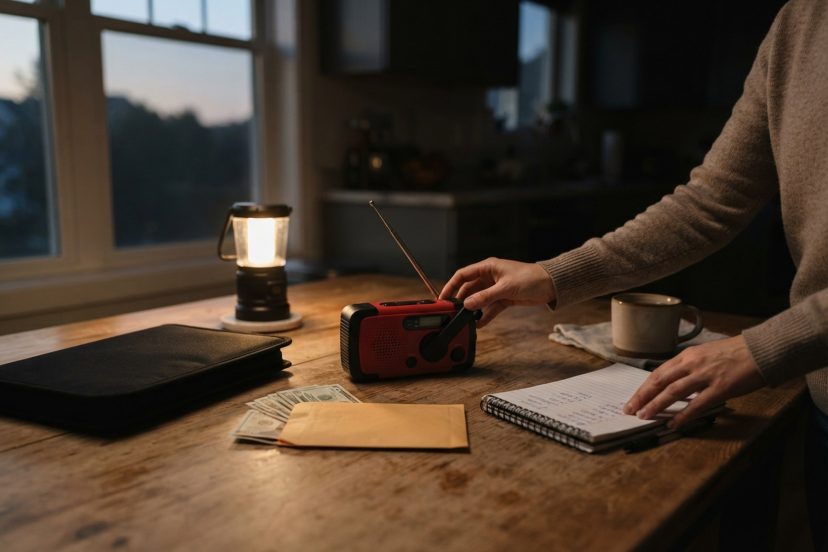
Quick Answer: When a cyberattack takes down a bank, pharmacy or phone carrier, the outage usually lasts days, not hours: cards get capped, bill pay stalls, prescriptions can’t be verified, and calls may not connect. A household plan means having some cash on hand, key documents and account numbers stored offline, a battery-powered radio and light source, a few days of your regular medications, and an out-of-area contact everyone knows to reach. None of it is complicated. Most of it costs very little and takes one evening to set up.
J.T. Wilder | Survival strategist, Survival Tactix | Last updated: September 28, 2026
In September 2026, customers of a small Wyoming bank went nearly two weeks without online or mobile banking after a cyber incident, and in the first days their debit cards were limited to $1,000 a day and payments scheduled through the bank were put on hold. It is a small, real example of a pattern that has shown up again and again this year: a single cyber incident at a bank, hospital system or pharmacy network doesn’t just inconvenience the company. It reaches straight into the households that depend on it.
This guide is not about hacking or IT security settings. That side of the household is already covered in our family digital security guide. This one is about the other half of the problem: what your household actually does during the outage week, while your bank, pharmacy or phone carrier sorts out their systems. A basic fireproof document bag and a little cash set aside cover most of it.
Disclosure: As an Amazon Associate, we earn from qualifying purchases. This article may also contain other affiliate links. If you buy through these links, Survival Tactix may earn a commission at no extra cost to you. We only recommend products that fit the scenario described.
What’s In This Household Cyberattack Plan?
Five things cover almost every household in an outage week. Here is the short version before the full explanation below.
| Need | What to have ready | Why it matters |
|---|---|---|
| Pay for things | A small cash reserve, in small bills | Card networks and bill pay can freeze for days |
| Prove who you are | Printed copies of key documents, offline | Portals and apps may be unreachable |
| Stay powered and informed | Power bank, backup power, NOAA radio | Phones die and news sites can be slow to update |
| Keep medications on hand | A few extra days’ supply, refilled early | Pharmacy systems can’t verify insurance during an outage |
| Reach your family | A written contact plan and an out-of-area contact | Local cell towers can jam even when the network itself is fine |
What Actually Happens When a Cyberattack Hits a Bank, Pharmacy or Phone Carrier?
It rarely looks like the movies. There’s no countdown clock or blackout across a city. It looks like a bank’s mobile app not loading, a pharmacy register that can’t verify insurance, or a carrier’s text messages arriving hours late. A few real examples from this year show the shape of it clearly.
In September 2026, Hilltop National Bank in Casper, Wyoming took its systems offline on September 8 after what it called a cybersecurity incident. All eight of its offices closed on September 9 and most reopened within two days, online and mobile banking stayed down for nearly two weeks (personal mobile banking returned September 21), and in the first days debit cards were limited to $1,000 a day at stores and ATMs and payments scheduled through the bank were held, according to American Banker and the bank’s own public updates. In February 2026, a cyberattack on the University of Mississippi Medical Center forced all 35 of its clinic locations to close and cancel appointments and elective surgeries, per the Center for Strategic and International Studies’ running list of significant cyber incidents. Further back, the February 2024 attack on Change Healthcare kept pharmacies nationwide from processing insurance claims for prescriptions for weeks, according to Pharmacy Times and a Delaware state consumer notice.
Two other widely remembered outages are worth naming honestly, because they are not cyberattacks and shouldn’t be called that: the July 2022 Rogers Communications outage across Canada, which knocked out Interac debit, mobile service and some 911 access, was an internal network failure. The February 2024 nationwide AT&T outage was a network configuration error. Both caused the exact same household problem this guide addresses, just from a different cause. What matters for your plan isn’t the label. It’s that any of these events can leave your bank, pharmacy or phone unreachable for a stretch of days, and a household plan should work regardless of which one happens.
How Do You Keep Paying For Things When Cards and Apps Stop Working?
Keep a modest amount of cash at home, in small bills, somewhere secure and easy to grab. This is not a financial strategy and it isn’t about distrust of banks: it’s a practical answer to a narrow problem, a card network or a specific bank’s systems being down for a few days. Cash still works at a register that has no way to check your balance or verify a chip. How much to keep is a personal decision based on your own budget and risk tolerance, and it’s worth talking through with your household, not something this article can size for you.
Along with cash, write down (on paper, not only in an app) your account numbers, the customer service line for each bank and card issuer, and your utility account numbers. If a bill is due during an outage, most billers will work with you once phone lines are back up, but only if you can tell them which account is yours without logging into a frozen portal.
What Records Should You Have Offline?
If a portal or app is down, a printed copy in a drawer works every time. A simple offline set for most households: insurance policy numbers and the agent’s phone number, medication lists with dosages and prescribing doctors, a copy of ID and any medical directives, and a short list of household contacts including one person who lives outside your area. Store the paper copies in something that survives a fire or a flood, not just a folder in a filing cabinet.
A fireproof, waterproof bag for the papers that matter
Keep insurance, ID copies and account numbers together in one place that survives a fire or a burst pipe, not scattered across drawers.
We built a free printable Household Outage Binder to make this section a five-minute job instead of a from-scratch project. The sign-up form near the top of this page sends it to you, and our guide to the offline emergency binder walks through what goes in each section and where to keep it.
How Do You Keep Power, Light and News When Systems Are Down?
A cyberattack on a bank or carrier doesn’t usually take the electrical grid down with it, but the two problems often arrive at the same time anyway, because the same severe-weather season that strains the grid is also when scammers and outages both spike. Either way, three things cover most of it: a way to keep phones charged, a way to keep small essentials running if the power does go out, and a battery or hand-crank radio that doesn’t depend on cell towers or the internet at all.
A portable power station for the whole household
A mid-size power station keeps a router, a few phones and a lamp running through a multi-day outage. We’ve compared the two leading brands in detail in our EcoFlow vs. Jackery guide.
A power bank for keeping phones alive
Even without a full power station, a large power bank buys your household a few extra days of charged phones, which matters most when you’re waiting on a callback from your bank or pharmacy.
For news, a battery or hand-crank NOAA weather radio is worth having even outside of storm season, because it picks up emergency broadcasts without needing cell service, Wi-Fi or a working app. We cover the full picture in our emergency radio guide, and our solar generator guide and 72-hour gear hub go deeper on backup power and kit-building generally.
A hand-crank NOAA weather radio
Charges by hand-crank or USB, and pulls NOAA weather-alert channels with no internet or cell signal required.
How Do You Keep Prescriptions Filled?
During the 2024 Change Healthcare outage, pharmacies across the country couldn’t process insurance claims, which meant some patients paid full price or had to wait for their medication. Two habits reduce the risk: refill maintenance medications a few days before you actually run out instead of waiting until the bottle is empty, and keep a written list of every medication, dose and prescribing doctor somewhere offline, in case you need to explain your regimen to a pharmacist who can’t pull up your file. If you or someone in your household depends on a medication that can’t be delayed, it’s worth asking your prescriber directly about a short backup supply. This is general information, not medical advice, so talk specifics through with your pharmacist or doctor.
How Do You Reach Family If the Network Is Down?
Local cell towers can get overloaded even when the wider network is technically fine, especially right after a widely reported outage, when everyone in town tries to call someone at once. Two habits help: agree on an out-of-area contact everyone in the household calls or texts if local lines are jammed (a long-distance call sometimes routes through when a local one won’t), and write the plan down rather than storing it only in a phone that might be dead. Our being-prepared guide covers the fuller family communication plan, including radios that don’t depend on cell towers at all.
How Do You Recover After the Systems Come Back On?
Once the bank, pharmacy or carrier says its systems are back, the outage isn’t fully over for your household. Check your bank and card statements closely for a few weeks afterward: incidents like these sometimes coincide with a spike in phishing attempts from scammers pretending to help with “the outage.” Never click a link in an unexpected text or email claiming to be your bank; call the number on the back of your card instead. If the incident involved a data breach rather than just downtime, IdentityTheft.gov walks through the right next steps, including when to consider a credit freeze.
This is also a good moment to strengthen your accounts against the next incident. A hardware security key adds a layer of login protection that a stolen password alone can’t get past, which we cover in depth in our family digital security guide.
A hardware security key for your most important accounts
A small, phishing-resistant key you plug in or tap to confirm it’s really you logging in, so a stolen password alone isn’t enough.
Calm + Courage: Preparedness can feel heavy, especially when life is already full. You do not need to do everything today. Pick one small win: check your flashlights, set aside a little extra water, or write down your family’s meetup plan. Small steps compound fast, and future-you will be grateful you started.
What Should You Buy Before the Next Outage?
None of this needs to happen in one trip. If you’re starting from zero, this order gets you covered fastest for the least money.
Tonight’s Shopping List
- Small cash reserve in a safe, accessible spot
- Fireproof, waterproof document bag for papers and account numbers
- A hand-crank NOAA weather radio
Frequently Asked Questions
How long does a typical bank or pharmacy cyber outage last?
Based on recent incidents, expect days rather than hours. Hilltop National Bank’s online banking outage ran nearly two weeks, and the Change Healthcare pharmacy outage disrupted claims processing for weeks. Plan around a multi-day disruption, not a brief one.
Is it safe to keep cash at home for this?
Keeping a modest amount of cash for short-term emergencies is a personal decision, not financial advice. Store it somewhere secure, like a fireproof safe or lockbox, and decide the amount based on your own household’s budget and comfort level.
Do I need to worry if my outage wasn’t actually a cyberattack?
No, the same household plan applies. The Rogers Communications and AT&T outages in recent years weren’t cyberattacks, they were network failures, but they created the identical problem for households: no card processing, no calls, no easy way to reach family.
What’s the single most important thing to do first?
Get your key documents and account numbers into one offline, fireproof place. It’s the fastest, cheapest step, and it’s the one most households skip until they need it.
Should I call my bank or pharmacy during the outage to check on things?
Phone lines are often just as overloaded as the systems themselves during a widely reported outage. Most banks and pharmacies post status updates on their website or social media once they’re aware of the issue; check there first before adding to a jammed phone line.
How do I know if a text about “the outage” is a scam?
Treat any unexpected text or email about an outage, especially one asking you to click a link or confirm account details, as suspicious. Go directly to your bank’s app or website by typing the address yourself, or call the number printed on your card, rather than using any link sent to you.
Resources and Related Guides
Trusted external resources
- CISA: Secure Our World
- Ready.gov: Financial Preparedness
- IdentityTheft.gov
- FDIC Consumer Resource Center
Related Survival Tactix guides
Next step
Get our free 72-Hour Emergency Checklist so tonight’s setup takes ten minutes instead of an evening, and keep exploring backup power in our EcoFlow vs. Jackery guide.