How to Prepare Your Home for a Flood: What to Do Before, During and After a Flood Warning
Fast track: the two decisions that matter most
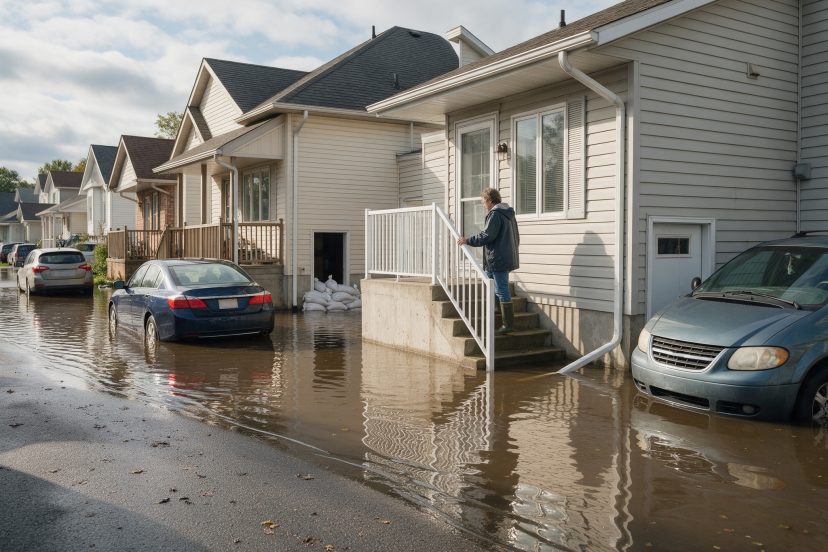
If a flood warning is active right now: get to higher ground, and never drive into water over the road. Everything else on this page can wait until you are safe.
Quick answer: Before a flood warning ever arrives, know your evacuation route and keep a few days of supplies on hand. When one is issued, get to higher ground immediately and never drive or walk into water covering a road. Afterward, let an electrician clear your power before you turn anything back on, treat tap water as unsafe until your utility says otherwise, and call your insurer, since most standard homeowners policies do not cover flood damage on their own.
J.T. Wilder | Survival strategist, Survival Tactix | Last updated: November 23, 2026
Floods are the most common natural disaster in the United States, and most of them have nothing to do with a hurricane. A storm that stalls over your area for a day, a river that was already running high from last week’s rain, or a storm drain that cannot keep up is usually all it takes. None of what follows requires a basement full of gear. It mostly requires knowing, before the rain starts, what you are actually supposed to do, because the mistakes that hurt people in a flood are almost always about timing: leaving too late, driving somewhere you should not, or turning something back on too soon.
Flood Watch vs. Flood Warning: What Do the Words Actually Mean?
The National Weather Service uses four specific terms, and they are not interchangeable:
- Flood Watch, be prepared: conditions are favorable for flooding. It does not mean flooding will occur, but it is possible, so this is the moment to get ready, not the moment to wait and see.
- Flood Advisory, be aware: flooding is not expected to be bad enough to issue a warning, but it may cause significant inconvenience, and could threaten life or property if you ignore it.
- Flood Warning, take action: flooding is imminent or already happening. This is no longer a planning moment.
- Flash Flood Warning, take action now: a flash flood is imminent or occurring. A flash flood can develop in minutes to hours, and you can be hit by one even in a spot that is not receiving any rain itself, because the water came from somewhere upstream.
If you remember nothing else from this section: a watch means plan now, and a warning means act now.
What Should You Do Before a Flood Warning Ever Arrives?
The cheapest flood preparation happens weeks before any warning, and most of it costs nothing:
- Learn your real flood risk. Your provincial, state, or local emergency management office can tell you whether you sit in a low-lying area, near a river, or downstream from something that overflows. Do not assume a home that has never flooded never will; just assume you do not know yet.
- Make a household plan. Decide where you would go, how you would reach each other if phones are down, and what you would do with pets before you are standing in your driveway deciding it in the rain.
- Sign up for alerts now. A weather radio or a phone alert service only helps if it is already set up before the storm.
- Know where your shutoffs are. Find your home’s main electrical panel and gas shutoff today, while you have time to look calmly, not during an emergency.
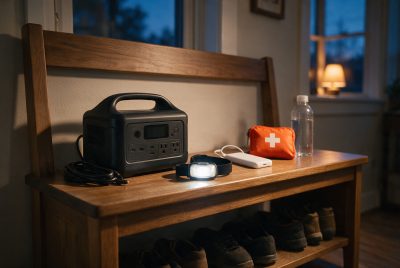
- Keep a few days of supplies. Water, food that needs no cooking, a flashlight, and a battery bank cover the gap between losing power and getting help.
- Grade water away from your home. Clear gutters, make sure downspouts drain away from your foundation, and check that the ground around your house slopes away from it rather than toward it.
If you want a printed version of the basics to keep where everyone in the house can find it, our 72-hour emergency checklist and offline emergency binder cover the same ground for any outage, not just a flood.
What Should You Do When a Flood Warning Is Issued?
Once a flood warning is active, the National Weather Service’s own guidance is short on purpose:
- Stay informed. Keep a radio, television, or NOAA Weather Radio going if you can, and check official updates rather than secondhand posts.
- Get to higher ground immediately if you live in a flood-prone area or are camping somewhere low-lying. Do not wait to see how bad it gets.
- Obey evacuation orders. If you are told to evacuate, do it right away. Lock up on the way out, and if you have the time, disconnect utilities and appliances.
- Practice electrical safety. Do not go into a basement or any room where water covers the outlets or submerges cords. If you see sparks or hear buzzing, crackling, or popping, get out, and stay out of any water that might be electrified.
If you are already caught by rising water on foot, move to the highest point you can reach and call 911 if it is safe to do so.
Why Is It So Dangerous to Drive Into Flood Water?
This is the single most common way people die in a flood, and the numbers are not close. The National Weather Service’s own figures for flood water are:
- 6 inches of fast-moving flood water can knock over an adult.
- 12 inches of rushing water can carry away most cars.
- 2 feet (24 inches) of rushing water can carry away SUVs and trucks.
Floodwater over a road also hides what is underneath it: washed-out pavement, sharp debris, and downed power lines. You cannot tell the difference between six inches and three feet by looking at it, and a vehicle caught in swiftly moving water can be swept away in seconds. That is the entire idea behind the National Weather Service’s own phrase for this: Turn Around, Don’t Drown. Never drive around a barricade, and never try to beat moving water across a road or a bridge where the water is close to or touching the structure. If you are heading out for the Thanksgiving weekend or any other drive during a flood watch or warning, build in time to take the long way instead of guessing.
What Do You Do About Power and Electricity After a Flood?
The CDC’s guidance here is specific, because this is where people get hurt returning home, not just during the flood itself:
- Never turn power on or off yourself while standing in water, and never use an electric tool or appliance while standing in water.
- If you have standing water in your home and can reach your main panel from a dry spot, you can turn the power off yourself. If reaching it means stepping into standing water, call an electrician instead.
- Have a certified electrician check your whole electrical system before you turn the power back on. Appliances that were flooded can shock or start a fire when switched on again.
- If you smell gas, turn off the main gas valve, open the windows, leave the house, and call the gas company, the fire department, or your fire marshal’s office from outside. Do not do anything that could create a spark, including flipping a light switch.
Carbon monoxide is the other hazard that shows up here, because a power outage is exactly when people reach for a generator. Never run a gasoline generator, pressure washer, or any gas-powered tool inside a home, basement, garage, carport, or porch, or within about 20 feet of any door, window, or vent, even with the windows open. Canadian guidance gives the same rule as roughly 6 metres. And never connect a generator directly into your home’s wiring without the proper transfer switch; it can become a fire hazard and can be lethal to utility workers restoring power on your street.
A power station skips the generator risk entirely
A battery power station has no exhaust, so it carries none of the carbon monoxide or fuel-storage risk of a generator, and it can run safely indoors. The EcoFlow DELTA 3 Classic is sized to run a fridge, a sump pump, lighting, and phone charging through a multi-day outage.
EcoFlow runs its own Black Friday sale from November 19 to November 30, 2026, for U.S. residents aged 18 or older with a shipping address in the continental U.S. EcoFlow’s Black Friday page shows what is on offer; we print no price from it.
Is Your Tap Water Safe to Drink After a Flood?
Treat it as unsafe until you are told otherwise. Floodwater can contaminate both surface water and the groundwater that feeds private wells and some municipal systems. The CDC’s rule is simple: follow your local, state, or tribal health department’s guidance on whether your water is safe, and if you have a private well in a flooded area, get it tested before you use it again. Do not use water you suspect is contaminated to brush your teeth, wash dishes, prepare food, wash your hands, or make baby formula. Safe water for drinking, cooking, and hygiene means bottled, boiled, or properly treated water, and your health department can tell you the right way to boil or treat water in your area.
If you have a private well and the main power switch was not shut off before the flood, do not re-enter your home until a qualified electrician has cleared it, and do not turn on the well pump yourself; have a certified well contractor inspect the well and its wiring first, since there is a real shock risk.
Boiling is still the right answer, with a backup for the gap
Boiled, bottled, or properly treated water stays the primary answer after a flood. A personal filter straw is not a floodwater treatment and will not make visibly contaminated or sewage-tainted water safe, but it is a reasonable backup for the hours before you can boil water or reach bottled supplies.
What About Your Important Documents?
Store important documents, such as identification, insurance policies, and titles, at a higher level in your home, and make copies or digitize them before you ever need to grab them in a hurry. A phone photo of every page, backed up somewhere other than the phone itself, costs nothing and takes an afternoon. If you want a complete, printable system for this, our offline emergency binder guide walks through exactly what to include, and what to leave out.
One waterproof bag, grabbed on the way out
A dry bag keeps documents, a phone, and medications dry whether you are evacuating ahead of rising water or just protecting a go-bag that sits near a basement door.
What If You Live in an Apartment or Rent?
Ground-floor units, basement apartments, and underground parking garages carry the most flood risk in any multi-unit building, so know which category you are in. Learn your building’s evacuation plan and where its utility shutoffs are, since you likely cannot access or safely operate them yourself. Keep your go-bag and documents ready to grab, since you cannot always move belongings to a higher floor the way a homeowner might. And do not assume your policy covers this: a standard renters policy insures your belongings against a list of named perils, and flood is typically not one of them any more than it is for a homeowner, so the insurance section below applies to you too.
What About Pets, Livestock, and Neighbors Who Need Help?
Bring pets with you. Do not leave them tied up or behind, and have a carrier, leash, food, and water ready before you need them. If you keep livestock in a rural setting, Canadian emergency guidance notes something counterintuitive: sheltering animals inside a barn during a flood can be the wrong call, since rising water can trap them there; leaving them unsheltered outside is often preferable. And before you leave, take a minute to check on neighbors who may need help evacuating, particularly older adults or anyone with limited mobility. That one knock on a door costs nothing and can matter more than anything on a gear list.
Does Homeowners Insurance Cover Flood Damage?
In the United States
Usually, no. Most standard homeowners insurance policies do not cover flood damage. Flood insurance through the National Flood Insurance Program, or through a private flood policy, is what covers it, and FEMA’s own guidance is clear that it typically takes about 30 days from purchase before a new flood policy becomes active. In plain terms, you cannot buy flood coverage once a flood warning is already posted and expect it to help with that flood. The decision has to be made in a calm month, not a wet one.
In Canada
Flood coverage is optional on a Canadian home policy, and it is worth checking exactly what you have, because the Insurance Bureau of Canada splits this into pieces that are easy to assume you have and do not. Overland flood coverage, for water from an overflowing lake, river, or heavy rainfall entering at ground level, is typically an optional endorsement. Groundwater and seepage coverage is usually separate again. Sewer backup coverage, for water backing up through your drains, is its own optional add-on too. If your home becomes unlivable because of damage from an insured peril, additional living expenses coverage can help with temporary accommodation, but check your policy’s limits before you assume it will cover everything for as long as you need.
This is not insurance advice. Check your own policy with your broker or insurance representative to confirm exactly what you have.
Next step: put the rest of your plan on paper
A flood is a 72-hour problem the moment the power or the water goes out. Our free checklist covers the rest of what to have ready, and the hurricane evacuation guide covers the “when do we leave” decision in more detail.
A Flood Is Survivable. Being Ready Is What Makes It Boring Instead of Terrifying.
Most of what protects a household in a flood is not expensive gear. It is knowing your risk ahead of time, having a few days of basics on hand, and making the boring decision to turn around instead of driving through water. None of that requires living in fear of the forecast. It just means the next flood watch in your area is a prompt to check a short list you already have, not a scramble.
Frequently Asked Questions
What is the difference between a flood watch and a flood warning?
A flood watch means conditions are favorable for flooding and you should prepare. A flood warning means flooding is imminent or already happening and you should act immediately.
How much water does it take to sweep away a car?
According to the National Weather Service, 12 inches of rushing water can carry away most cars, and 2 feet of rushing water can carry away SUVs and trucks. Just 6 inches of fast-moving flood water can knock over an adult.
Should I turn off my power before a flood?
Only if you can reach your main panel from a dry location. Never enter standing water to turn power on or off, and have an electrician inspect your system before switching it back on after a flood.
Is tap water safe to drink after a flood?
Treat it as unsafe until your local health department or water utility says otherwise. Use bottled, boiled, or properly treated water for drinking, cooking, and hygiene in the meantime.
Does homeowners insurance cover flood damage?
Usually not. Most standard homeowners policies in the United States and Canada exclude flood damage, and you typically need separate flood insurance or an optional overland water endorsement.
How long does it take for flood insurance to start working?
In the United States, a new National Flood Insurance Program policy typically takes about 30 days to become active, so it needs to be purchased well before a flood threat, not during one.
Disclosure: This article may contain affiliate links. If you buy through these links, Survival Tactix may earn a commission at no extra cost to you. We only recommend products that fit the preparedness scenario and reader need. This article is educational and is not insurance, legal, or emergency-management advice; follow instructions from your local emergency officials.
Sources
- National Weather Service: Flood Warning vs. Watch
- National Weather Service: During a Flood
- National Weather Service: Turn Around Don’t Drown
- CDC: Safety Guidelines for Reentering Your Flooded Home
- FEMA: Flood Insurance and the 30-Day Waiting Period
- Government of Canada: Floods, Get Prepared
- Insurance Bureau of Canada: Flooding and Insurance