How to Purify Water in the Wild: A Lifesaving Survival Skill
J.T. Wilder | Survival strategist, Survival Tactix | Last updated: July 1, 2026
Imagine being miles from civilization, your water bottle empty, and no clean stream in sight. What you do next could genuinely mean the difference between life and death. In fact, knowing how to turn questionable water into a safe drink is one of the most valuable skills anyone can carry into the backcountry, so this guide walks through every method worth knowing, in the order you should actually reach for them.
Quick answer: what’s the fastest safe way to purify water in the wild?
Boiling is the gold standard because it kills bacteria, viruses, and protozoa with no gear beyond a metal container and fire. However, a portable filter (like a Sawyer Squeeze or LifeStraw) paired with chemical tablets is faster and more practical day to day, since filters remove protozoa and bacteria while tablets or drops handle the viruses filters can miss. Therefore, carry at least two methods, and always favor the cleanest, fastest-moving source you can find.
Fast track: If you only remember one rule, remember this: filter first to remove debris and microbes, then treat with tablets or heat if the source is questionable. That combination covers nearly every wilderness scenario.
Get the 72-Hour Checklist (email) Check gear prices (hub)
Disclosure: As an Amazon Associate, SurvivalTactix earns from qualifying purchases. Some links may also be affiliate links (Survival Frog). This supports the site at no extra cost to you.
Preparedness information is for general education and is not a substitute for official public health guidance. Always follow manufacturer instructions and local advisories.
Jump to: Quick answer • Why it matters • Purification methods • Quick Picks: Filters & tablets • Choosing a method • Step-by-step • Finding water • Mistakes to avoid • Resources • FAQ
Why must you purify water in the wild, even when it looks clean?
Even if a stream looks pristine, don’t be fooled. Untreated water can harbor invisible enemies: bacteria, viruses, protozoa, and parasites that a clear appearance says nothing about. In particular, waterborne threats like giardia, cryptosporidium, and E. coli cause vomiting, diarrhea, and fever that can dehydrate you faster than the heat or cold around you. So, the real risk isn’t thirst; it’s trading one emergency for a worse one.
You need water, but it must be safe water. Ultimately, purifying water in the wild is about balancing urgency with a method that actually matches the risk in front of you.
Filtration vs. purification: what’s the difference?
Filtration physically strains out debris, protozoa, and many bacteria, but it does not reliably remove viruses. Purification, on the other hand, goes further and is designed to destroy or inactivate viruses as well as bacteria and protozoa. Consequently, the safest approach in most backcountry situations is to use both: filter to remove particles and larger organisms, then treat chemically or with heat to close the gap filters leave open.
What are the top methods to purify water in the wild?
Boiling: why is it still the gold standard?
Boiling is king because it kills essentially everything: viruses, bacteria, and protozoa alike. Simply let the water reach a rolling boil for at least 1 minute, or 3 minutes above 6,500 feet in elevation, since water boils at a lower temperature at altitude. Afterward, let it cool before drinking or transferring it to a clean container.
Portable filters: when should you reach for a LifeStraw or Sawyer?
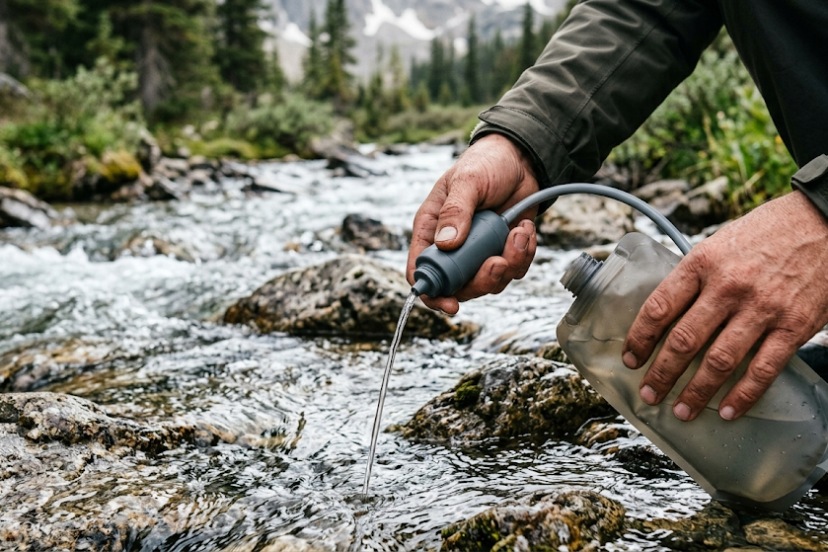
From the ultra-portable LifeStraw to squeeze systems like the Sawyer Squeeze, filters are fast, reusable, and require no wait time. That said, most hollow-fiber filters don’t remove viruses, so pair one with tablets when the water source is questionable or downstream of human activity.
Purification tablets or drops: how do chemical treatments work?
Chemical treatments like chlorine dioxide or iodine are lightweight, shelf-stable, and ideal as a backup layer. However, wait times vary from 30 minutes to 4 hours depending on water clarity and temperature, so plan ahead rather than treating them as instant.
Distillation: when is it worth the effort?
Distillation is useful if you have fire and a metal container to spare, because it removes essentially everything, including salt. Even so, it is slow and gear-intensive, so treat it as a specialty method rather than a daily one.
Solar disinfection (SODIS): does sunlight alone work?
Yes, to a degree. Expose clear PET bottles to direct sunlight for at least 6 hours, and longer if the sky is overcast. It’s inexpensive and simple, though slower than other methods and only reliable in genuinely sunny conditions.
DIY charcoal-sand filter: what can it actually remove?
Layering gravel, sand, and charcoal in a bottle or container clarifies water by removing particles. Still, it will not reliably kill microbes on its own, so always pair it with boiling or chemical treatment before drinking.
Natural plant-based methods: are they reliable?
Some plants, such as moringa seeds, can help clarify cloudy water by binding to particles. Nevertheless, these methods clarify rather than disinfect, so use them only alongside boiling, filtering, or chemical treatment, not instead of them.
Quick Picks: filters and purification tablets worth carrying
No single product covers every scenario. Instead, match the pick below to the trip, then carry a chemical backup regardless of which filter you choose.
| Best for | Pick | Why it earns the spot | Where to check price |
|---|---|---|---|
| Best overall / fastest flow | Sawyer Squeeze Water Filtration System | High flow rate, removes 99.99999% of bacteria and 99.9999% of protozoa, rated for up to 100,000 gallons | Amazon US • Amazon Canada |
| Best ultralight backup | LifeStraw Personal Water Filter | No moving parts, drinks straight from the source, easiest single item to toss in any bag | Amazon US • Amazon Canada |
| Best chemical backup (kills viruses) | Aquatabs Water Purification Tablets | Closes the gap filters leave open; lightweight enough to carry as a permanent backup layer, with bonus chlorine test strips to check your water afterward | Amazon US • Amazon Canada |
| Best budget straw | Personal Water Filter Straw (Frog & Co.) | Simple, inexpensive entry point for a first backcountry kit: $18.72 direct from Survival Frog | Check price at Survival Frog |
How do you choose the right method for the situation?
How much time and fire do you have?
If you’re in a rush, reach for tablets or a straw-style filter. Alternatively, if you already have a fire going, boiling is free and requires nothing extra.
What kind of contaminants are likely?
Filters won’t catch viruses, so combine methods whenever you’re unsure what’s upstream, especially near livestock, campsites, or settlements.
How portable does your setup need to be?
Always carry at least two methods in your kit, since a single point of failure, a clogged filter or a dropped bottle of tablets, shouldn’t leave you without options.
Step-by-step instructions for each method
How do you boil water safely in the wild?
- Use a metal pot or container.
- Bring the water to a rolling boil for 1–3 minutes, depending on elevation.
- Let it cool before drinking or transferring.
How do you use a portable filter correctly?
- Screw the filter onto your bottle, or use the straw directly from the source.
- Suck or squeeze water through the filter element.
- Clean and back-flush your filter regularly so flow rate doesn’t drop.
How do you use water purification tablets?
- Add one tablet per quart or liter, per the package instructions.
- Shake or stir to dissolve.
- Wait 30 minutes to 4 hours, depending on water clarity and temperature.
How do you build a solar still?
- Dig a pit in moist soil.
- Place a collection container in the center.
- Cover the pit with plastic sheeting, weighing down the center over the container.
- Collect the condensation that gathers on the underside of the plastic.
How do you build a charcoal filter from scratch?
- Cut a plastic bottle in half.
- Layer cloth, charcoal, sand, and gravel inside the top half, inverted.
- Pour water through slowly, then treat it further before drinking.
Tips for finding water sources in the wild
Running water is generally safer than stagnant water, so follow animal tracks, look for green vegetation or low points in the terrain, and listen for the sound of water nearby. Meanwhile, avoid stagnant pools and any water near industrial zones, farms, or heavy human traffic, since contamination risk rises sharply in those spots.
What should you pack in a water purification kit?
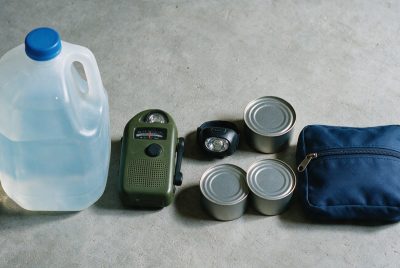
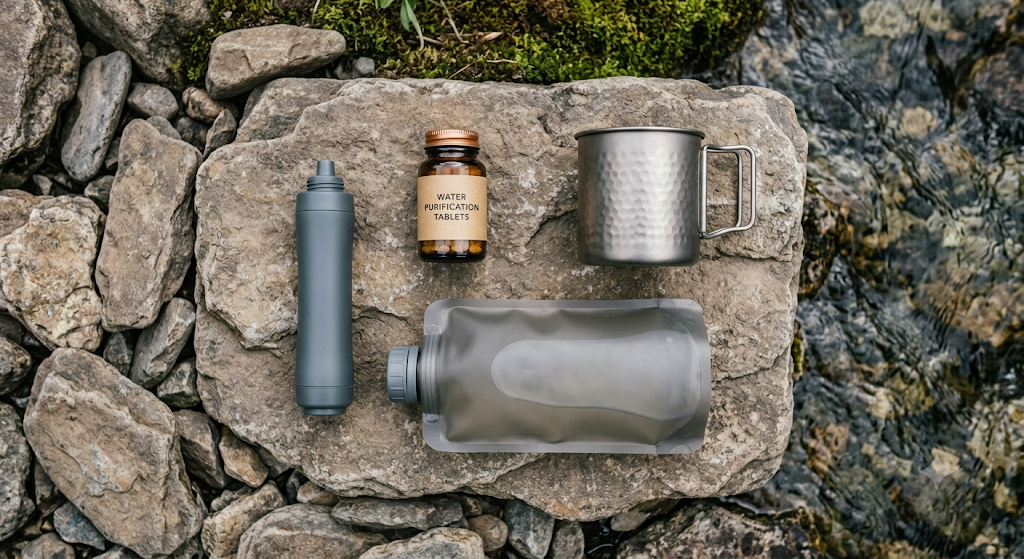
- Portable filter (LifeStraw or Sawyer)
- Purification tablets or drops
- Collapsible water bottle or bladder
- Metal container for boiling
- Plastic sheeting for a solar still
For the household side of water preparedness, storage rather than backcountry purification, pair this kit with Long-Term Water Storage, and see the EMP Survival Kit guide if you also want a non-electronic backup purifier stored in your Faraday setup.
The one item to buy first: if you only add a single piece of gear to a water kit, make it a personal filter: it works with no fuel, no power and no waiting. LifeStraw Personal: Check price (US) · Check price (Canada)
What mistakes should you avoid when purifying water?
Common mistakes include skipping pre-filtration of cloudy water, under-boiling or rushing chemical treatment times, relying on a single method with no backup, and forgetting to dry filters between uses. So, build the habit of carrying two methods and following wait times exactly, even when you’re in a hurry.
Related reading: for how water and shelter decisions played out in documented emergencies, see our real-life survival case studies.
A Quick Word of Encouragement
You don’t need every method in this guide to be ready. Most people who feel confident in the backcountry started with just one filter and one backup method, then built the habit of actually using them before they needed to. Pick a filter, add a pack of tablets, and practice once at home so it’s second nature outdoors. That alone puts you ahead of most hikers on the trail. Progress here isn’t about owning more gear; it’s about trusting the two or three tools you already know how to use.
Clean water is a skill, not just a supply
Water is life, but in the wild, only clean water keeps you moving. By learning these purification techniques and carrying at least two methods, you’re not just prepping for the worst; you’re building a skill that works whether you’re on a day hike or riding out a longer emergency. Always prepare, always verify your method matches the risk, and never assume a clear stream is a safe one.
FAQ: purifying water in the wild
Does boiling remove chemicals as well as germs?
No. Boiling kills biological contaminants like bacteria, viruses, and protozoa, but it does not remove chemical pollutants or heavy metals. Therefore, avoid sourcing water from industrial runoff or agricultural areas regardless of how you plan to treat it.
Can I just use a filter without tablets?
You can, but most portable filters do not reliably remove viruses. As a result, filters work best paired with a chemical treatment or boiling whenever the source is uncertain, such as near campsites or downstream of any settlement.
How long do purification tablets take to work?
Typically between 30 minutes and 4 hours, depending on the product, water temperature, and clarity. In particular, cold or cloudy water needs more time, so always check the package instructions rather than guessing.
Is solar disinfection (SODIS) reliable in cloudy weather?
Not as reliable. SODIS depends on strong, direct sunlight for at least 6 hours, so overcast conditions significantly reduce its effectiveness. Consequently, treat it as a fallback rather than a primary method.
What’s the single best backup method if my filter fails?
Boiling, if you have fire and a container. Otherwise, purification tablets are the lightest and most reliable backup to carry alongside any filter.
Trusted resources and related guides
Trusted external resources
- CDC: Making Water Safe in an Emergency
- EPA: Emergency Disinfection of Drinking Water
- Ready.gov: Water
Related SurvivalTactix guides
- Long-Term Water Storage
- Being Prepared for Emergencies
- EMP Survival Kit: Build Faraday-Proof Essentials
- 72-Hour Emergency Kit Gear Hub
- Key Survival Products
Next step
Pick one filter and one chemical backup, then practice both before you need them.