When the Pharmacy’s Systems Are Down: Protecting Your Prescriptions and Medical Records
Quick Answer: If your pharmacy’s computer system goes down, you may not be able to fill or refill a prescription until it is restored. Keep at least seven to ten days of each medication on hand, carry a one page list of your prescriptions and dosages, and know which backup pharmacy can look you up if your usual one is offline.
J.T. Wilder | Survival strategist, Survival Tactix | Last updated: October 26, 2026
This article is for general preparedness planning only and is not medical advice. Always talk with your doctor or pharmacist about your own medications. Survival Tactix may earn a commission from qualifying purchases made through links on this page, at no extra cost to you.
Why Does a Pharmacy’s Computer System Go Down in the First Place?
Every prescription you fill passes through more computer systems than most people realize. Your pharmacy’s own software checks your insurance, matches the prescription to your doctor’s order, and screens for drug interactions. That software talks to a separate claims processing network run by a different company, which talks to your insurer, which talks back to the pharmacy before anything gets handed over the counter. If one link in that chain goes down, the whole transaction can stall, even if the pharmacist standing in front of you is ready and willing to help.
This is not a rare or hypothetical problem. On October 21, 2025, a network connection problem kept some CVS pharmacies across the country from delivering prescriptions to customers until the company fixed it that day, leaving some customers unable to pick up their medicine or facing delays. In February 2024, a cyberattack on Change Healthcare, a company that processes insurance claims for thousands of pharmacies nationwide, disrupted prescription processing for weeks at pharmacies that had nothing to do with the breach itself. If you needed a refill during either event, it could matter a great deal. It is one piece of the larger picture we cover in our guide to preparing your household for a cyberattack on everyday services.
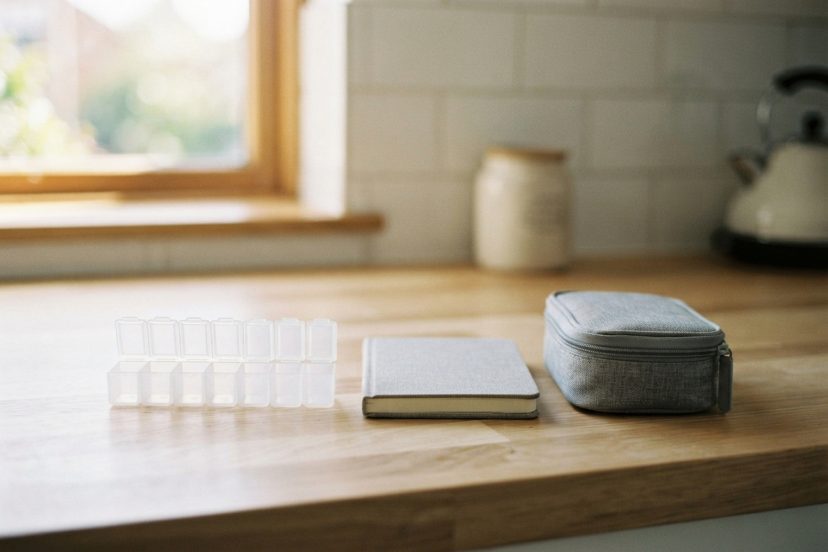
Weekly Pill Organizer
Once you start keeping a few extra days of each medication on hand, a labeled weekly organizer helps keep the dosing straight so fewer doses get doubled up or missed. Ask your pharmacist whether an organizer is right for your medications.
How Many Days of Medication Should You Keep on Hand?
The Virginia Department of Health suggests keeping at least a seven to ten day supply of prescription medications. Whenever your insurance allows an early refill, a small cushion is the single easiest thing on this page to act on this week, so ask your pharmacy whether an early or 90-day fill is possible and what it would cost.
Some states also give pharmacists discretion to dispense a short emergency supply during a declared disaster, even without reaching your prescriber. The Texas State Board of Pharmacy, for example, has issued emergency refill notifications during severe storms that let pharmacists use their professional judgment. Rules like this vary by state and are not guaranteed to apply to every situation, so treat an emergency refill provision as a possible backstop, never as your main plan.
Build a One Page Medication Backup Sheet
A paper backup sheet is what helps a different pharmacy, an urgent care clinic, or an emergency room understand what you take, even if every computer system involved is down at once. The FDA’s own guidance on medication lists recommends keeping this information current and on hand, not just filed away somewhere. For each medication, write down the exact brand and generic name, the strength, how often you take it, and what it is for, since many drug names look and sound alike. Add your prescribing doctor’s name and phone number, your pharmacy’s name and phone number, your insurance member ID and group number, any allergies, and one emergency contact.
Encrypted USB Drive
Keep a digital backup of your medication sheet, insurance cards, and ID scans on an encrypted drive that does not depend on an app, a password manager, or an internet connection to open.
Fire Resistant Document Bag
Store the printed sheet alongside your other critical paperwork in a fire resistant, water resistant bag. The US and Canadian listings are different bags with different sizes, so check the dimensions against what you plan to store.
What to Do If You Need to Fill at a Different Pharmacy
Call ahead if you can, and bring either the physical pill bottle or your backup sheet. A pharmacy in the same chain can often look up your prescription history, while a different chain may need your prescriber or your usual pharmacy to supply it, and the pharmacist there still has to verify your insurance and check for drug interactions, which can take longer without full system access. If the medication cannot wait, such as insulin, a heart medication, or a seizure medication, say so clearly. Some states allow a pharmacist to dispense an emergency supply during a declared emergency, so ask the pharmacist what is possible where you are.
Keep your physical insurance card in your wallet rather than only in an app. Some outages affect the insurer’s app or online portal specifically, while the physical card’s information can still get you through the register. Medications are also one line item on a full 72 hour emergency checklist, worth building alongside this plan.
Keeping Temperature Sensitive Medications Safe During an Outage
Insulin and some other injectable or liquid medications need to stay within a specific temperature range. MedlinePlus notes that unopened insulin belongs in the refrigerator, that opened insulin can generally be kept at room temperature (59 to 86 degrees Fahrenheit) for up to 28 days, and that insulin that has frozen should not be used, which matters whether you are dealing with a pharmacy system outage, a power outage, or both at once, since one storm can cause either. A dedicated insulated medical case with its own gel packs keeps these medications separate from a shared cooler that family members keep opening for food and ice. Keep insulin from touching frozen gel packs, because freezing ruins it. The FDA says unopened and opened vials and cartridges can typically stay at 59 to 86 degrees Fahrenheit for up to 28 days, and that insulin loses potency the longer it is exposed to heat above that, so keep it as cool as you can. Check the label on your product or ask your pharmacist about your exact insulin.
Insulated Medication Travel Case
A dedicated case with gel packs for insulin and other temperature sensitive medications, kept separate from the family cooler so it is not opened and reopened all day.
Back Up Your Medical Records Digitally, Too
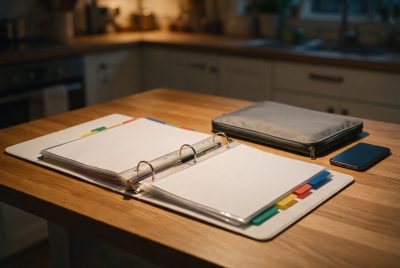
Alongside the paper sheet, keep a password protected digital copy of your medication list and insurance cards. Check whether your patient portal lets you download or print a visit summary and medication list; if it does, it is worth doing at your next appointment while you are already logged in. Save that file, and photos of your insurance cards, on an encrypted drive you keep with your other emergency documents, not only in cloud storage you might not be able to reach if your phone or your internet connection is also down. This pairs naturally with the rest of your offline emergency binder.
None of this takes a special skill or a lot of money. A notebook page, fifteen minutes, and a bag that seals are most of what it takes. Start with the list. Everything else gets easier once that exists.
Frequently asked questions
How many days of medication should I actually keep on hand?
The Virginia Department of Health suggests keeping at least a seven to ten day supply of prescription medications, and an early refill is one way to build that cushion when your insurance allows it. If your plan restricts early fills, ask your doctor or pharmacist what options exist, such as a short extra supply you can fill ahead of a known risk period, like hurricane season.
Can a different pharmacy fill my prescription if my regular one is down?
Sometimes, especially within the same chain, but the pharmacist there still needs your insurance and prescriber information. Bring your backup sheet and your physical insurance card, and say clearly that it is an urgent fill if your medication cannot wait.
Does my state guarantee an emergency refill during a declared disaster?
Not necessarily. Some states allow pharmacists to dispense a short emergency supply at their discretion during a declared emergency, but the rules vary by state and situation. Treat it as a possible backstop, not your main plan.
What should I do with insulin if the power is also out?
Move it to an insulated case with gel packs rather than a shared cooler that gets opened repeatedly for food and ice. Unopened insulin is normally refrigerated, but the FDA says vials and cartridges, opened or not, can typically stay at 59 to 86 degrees Fahrenheit for up to 28 days. Never use insulin that has frozen, so keep it from touching frozen gel packs. Ask your pharmacist about your specific product.
Where should I keep my written medication list?
One copy in your wallet or with your phone, one with your other emergency paperwork, and a photo of it saved somewhere you can reach without needing an app that depends on the same systems that might be down.
Next Step: Build Your Backup Sheet This Week
Fifteen minutes with a notebook is all it takes to write down every medication you take, its dosage, your doctor, your pharmacy, and your insurance details, and our full preparedness gear hub can help you fill in the rest of your kit. Pair it with a few extra days of supply in a labeled organizer, and you have covered one way households get stuck without medication.
Sources
- Ready.gov, Tips for Medications
- FDA, Create and Keep a Medication List for Your Health
- MedlinePlus, Insulin Storage and Switching Between Products
- Texas State Board of Pharmacy, Severe Storm Emergency Refill Notification
- WECT News, Some CVS Pharmacies Can’t Fill Prescriptions Due to a System Outage
- ABC7 New York, Pharmacies Across US Having Trouble Processing Prescriptions Because of Cyberattack
- CNN, CVS pharmacy outage
- Healthcare Dive, Change says its largest claims clearinghouses coming back online
- AARP, How to Get Your Prescription Drugs During a Disaster
- Virginia Department of Health, Prescriptions: Prepare Your Medicine Cabinet for an Emergency
- FDA, Information Regarding Insulin Storage and Switching Between Products in an Emergency