Always Be Ready: A Q&A Guide to Emergency Preparedness and Survival Planning
J.T. Wilder | Survival strategist, Survival Tactix | Last updated: September 27, 2026
Quick Answer: Real preparedness isn’t gear, it’s clarity. This guide breaks down the Rule of Threes (air, shelter, water, food), why most people freeze in the first 30 seconds of a crisis, and why a written family plan beats another purchase. Start with water, a communication plan, and one practiced skill.
Jump to: Why preparedness isn’t stockpiling • The Rule of Threes • Water and food • Bug out vs. bug in • Skills over gear • Family and community • Beginner mistakes • FAQ
Emergencies don’t send invitations. One moment life is normal, and the next, everything turns upside down: wildfires, blackouts, storms, supply disruptions. Preparedness doesn’t erase that uncertainty, but it changes how you move through it.
To dig into what actually matters, this guide pulls together the emergency preparedness and survival planning guidance that follows, organized as plain answers to the questions people actually ask.
This guide is organized as the questions readers ask us most, answered from published guidance (Ready.gov, CDC, and established wilderness first aid/CERT training standards) and plain household logic.
Why Preparedness Is More Than Stockpiling
Preparedness isn’t paranoia. It’s empowerment. People think survival is about hoarding canned beans and building bunkers, but true preparedness is about mindset, skills, and systems.
Think of it like a seatbelt. You don’t buckle up only when you expect a crash. You do it every time, because the cost of being ready is small and the cost of not being ready isn’t. Preparedness works the same way.
Why do people freeze in a crisis?
Most people freeze in the first 30 seconds of a crisis. They don’t lack supplies. They lack clarity.
Panic is a normal human response to sudden chaos, but rehearsal and planning measurably shift the brain from “panic mode” to “action mode”. Here are three simple mental drills worth practicing:
- Visualize likely scenarios for your area, like a power outage or a short evacuation.
- Practice calm decision-making under time pressure.
- Walk your family through the plan until they can follow it without confusion.
It’s not about fear. It’s about familiarization. When you’ve walked through the fire mentally, you don’t get burned when it’s real.
What Is the Rule of Threes?
The Rule of Threes breaks preparedness priorities down. It’s a widely used survival heuristic, a rule of thumb, not a scientific guarantee, but a useful way to order your attention:
- You can survive roughly 3 minutes without air.
- You can survive roughly 3 hours without shelter in a harsh environment.
- You can survive roughly 3 days without water.
- You can survive roughly 3 weeks without food.
Most folks prep food first. But what good is that if you’re freezing, thirsty, or unconscious? Prioritize the real threats first.
Water and Food: Getting the Basics Right
Why is water the most ignored priority?
Water is life, yet so many people treat it as an afterthought. Every household should have:
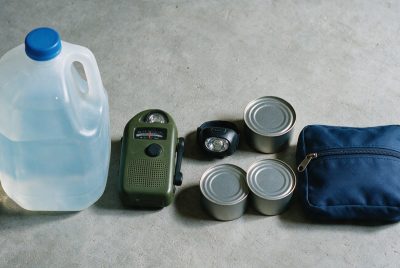
- A 72-hour supply of drinking water: roughly one gallon per person per day.
- Multiple purification options: filters, tablets, and boiling as a backup.
- A plan for local water sources if you need to go beyond 72 hours (see How to Purify Water in the Wild for field methods).
Tap water can be compromised during disasters. Don’t assume it’s fine just because it comes out of the faucet.
What does smart food storage actually look like?
Food storage is about variety, nutrition, and rotation: high-calorie shelf-stable staples (beans, rice, oats), freeze-dried meals for convenience, and a few comfort foods to help morale. For a deeper system beyond the first 72 hours, see Long-Term Food Storage for Emergencies and Preppers.
Here’s the gap most people miss: a pantry that looks like a warehouse doesn’t help if you don’t know how to cook any of it over a camp stove or a fire with no power.
Bug Out vs. Bug In: How Do You Decide?
Your first decision in an emergency is critical: do you stay, or do you go?
Bugging in means sheltering at home: the right call when conditions are safe and you’re well-supplied. Bugging out means evacuating, usually because of fire, flooding, a chemical spill, or an official order.
Every household should have three things in place before they need them:
- A Bug-Out Bag: grab-and-go gear packed for 72 hours.
- A Bug-In Plan: backup power, food, water, and basic security for sheltering at home.
- A written communication plan: an out-of-town contact and a meeting point, agreed on in advance. Ready.gov’s Family Communication Plan is a free, ready-made template if you want a starting point rather than building one from scratch, and it pairs directly with our own guide on why communication and navigation matter in a crisis.
Waiting too long to leave can be dangerous, but leaving too early can expose you unnecessarily. Know the signs, and trust your instincts.
Skills Over Gear: Why Training Beats Buying
You can buy gear. You can’t buy competence. Plenty of people own thousands of dollars in gadgets and still can’t start a fire, while someone with a ten-dollar ferro rod can, simply because they’ve practiced.
Five skills are worth actually training, not just watching a video on:
- Fire-making, in both wet and dry conditions
- Basic first aid
- Navigation without GPS
- De-escalation and basic self-defense
- Shelter-building
For a structured way to build these, see our guide to survival and emergency training certification. Don’t just watch it. Practice it: skills stick when your hands remember what your mind forgets.
What keeps people going when things get hard?
Call it the will to live: hope, focus, and adaptability. People with almost nothing have made it through extreme conditions because they refused to quit, while well-equipped people have given up fast because they weren’t mentally ready. Believing you can get through it is already half the battle.
Involving the Whole Household
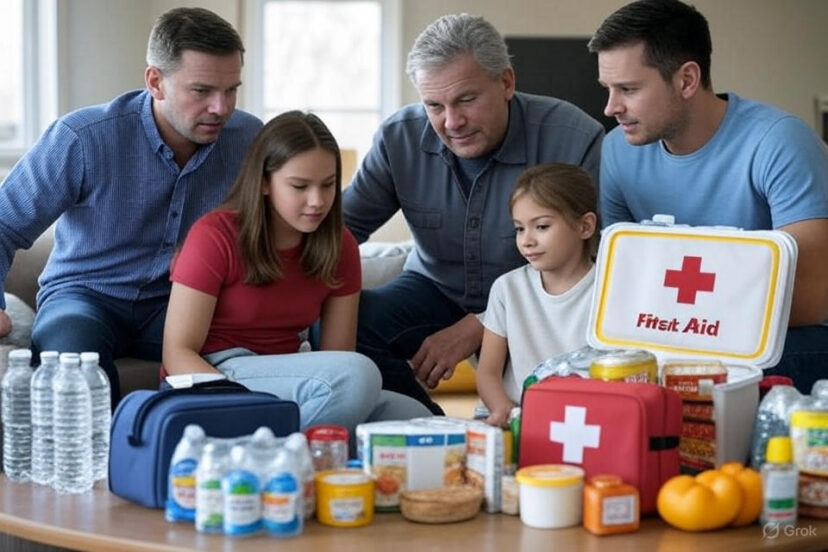
Preparedness isn’t a solo act. It’s a team effort. Every family member should know the emergency contacts, understand the evacuation plan, and have a role: navigation, communication, pet care, whatever fits.
For kids specifically, making it a game rather than a lecture works better: a shelter drill can be framed as hide-and-seek, a walk can become a scavenger hunt for what’s edible nearby. CDC’s Ready Wrigley activity books are a free, kid-friendly way to do this if you want a ready-made starting point. Preparedness builds confidence in children, not fear.
On tools: technology is a great servant but a poor master. A solar phone charger, a solar generator, an emergency radio with NOAA alerts, a flashlight with spare batteries, and a printed copy of the family plan are reasonable analog backups. Batteries die. Networks crash. Always have a backup that doesn’t need power.
And on community: lone wolves rarely make it long-term. Neighbors, shared skills, and local response plans act as force multipliers. The more people you help prepare, the safer you are too.
Biggest Mistakes Beginners Make
The same five mistakes come up repeatedly:
- Over-preparing on gear, under-preparing on skills.
- Treating water as an afterthought.
- Not involving the whole family.
- Relying only on phones and apps.
- Waiting for a crisis to start preparing.
The bottom line: You don’t need to live off-grid with solar panels and a homestead. But imagine if your family didn’t panic when the lights went out, if your kids felt safe while things got chaotic outside. That’s the actual point of preparation. It’s not about fearing the future. It’s about facing it with a plan.
Calm + Courage: Preparedness can feel heavy, especially when life is already full. You do not need to do everything today. Pick one small win: check your flashlights, set aside a little extra water, or write down your family’s meetup plan. Small steps compound fast, and future-you will be grateful you started.
A Word of Encouragement
Expert advice can make preparedness sound like a full-time pursuit. It isn’t. Notice how much of what’s recommended here is simple, cheap, and one-time. You don’t need specialist training to be meaningfully more resilient than you were last month: you mostly need to start, and then keep going slowly.FAQ
What is the most important item to have during an emergency?
Water. You can go far longer without food than without clean water, so store and be ready to purify water before anything else.
How much food should I store for my family?
Start with 72 hours per person, then build toward a deeper pantry over time. Rotate stock so nothing goes stale unnoticed.
What is a Bug-Out Bag, and what should go in it?
A pre-packed 72-hour kit: water, food, first aid, a change of clothes, a flashlight, a radio, copies of key documents, and a basic multi-tool.
How do I involve my kids in preparedness without scaring them?
Turn it into a game: a scavenger hunt, a shelter-building afternoon, a weekend camping trip. Kids absorb skills faster through play than lectures.
Do I need to prepare if I live in a city?
Yes. Urban areas lose power, water, and food access during disruptions just like rural ones, often faster, given the population density.
Is the Rule of Threes scientifically exact?
No. It’s a rule of thumb for ordering priorities under pressure, not a guaranteed timeline. Individual circumstances change the numbers, but the priority order (air, shelter, water, food) still holds.
What’s the single best thing a beginner can do this week?
Write a one-page family communication plan: an out-of-town contact, a meeting point, and what to do if phones go down. It costs nothing and it’s the piece most people skip.
Conclusion: Preparedness Is a System, Not a Purchase
Emergencies test what you’ve built in advance, not what you scramble for in the moment. You don’t need to be a survivalist to be ready: you need a plan, a few practiced skills, and a household that knows what to do in the first hour.
Next step: If you haven’t already, start with Being Prepared for Emergencies for the full 72-hour framework this guide builds on throughout.