Best Fire Starters For Survival
Quick Answer: The best fire starters for survival are the ones that still work when your hands are cold and everything around you is wet. The Light My Fire FireSteel Army is the best all-around pick: a ferro rod that throws sparks in any weather. Pair it with UCO Stormproof Matches for wet-weather backup, a bayite ferro rod if you’re on a budget, and a rechargeable plasma lighter if you want the simplest beginner option. Carry more than one.
J.T. Wilder | Survival strategist, Survival Tactix | Last updated: September 25, 2026.
Disclosure: This article may contain affiliate links. If you buy through these links, Survival Tactix may earn a commission at no extra cost to you. We only recommend products that fit the preparedness scenario and reader need. As an Amazon Associate, SurvivalTactix earns from qualifying purchases.
When you’re out in the wild, one simple truth reigns supreme: if you can make fire, you can survive. Whether you’re camping, bugging out, or facing an unexpected emergency, having a reliable fire starter is not just handy. It can be the difference between comfort and a genuinely dangerous night.
This guide walks through the best fire starters for survival, how to use each one effectively, and the wet-weather and cold-hands details that most gear roundups skip.
Why Is Fire So Essential in a Survival Situation?
It is easy to take fire for granted when you can flick a switch at home. In a survival situation, fire is life. Here is why it matters more than almost anything else in your kit.
Fire Prevents Hypothermia
Hypothermia can set in faster than most people expect, especially in wet or windy conditions. Fire is your best defense, providing warmth that keeps your core temperature stable while you work out your next move.
Fire Makes Water and Food Safe
Not every water source is safe to drink. Boiling water over a fire eliminates most harmful bacteria and parasites, and fire also lets you cook wild edibles or game you might catch. For a deeper walkthrough of the water side of this equation, see our guide to purifying water in the wild.
Fire Signals for Help and Deters Predators
Smoke can be seen for miles, and flames keep most predators at a distance. There is also a psychological piece here that is easy to underestimate: fire provides real comfort and morale in an otherwise hostile environment.
What Makes the Best Fire Starters for Survival Actually Reliable?
Not all fire starters are created equal. Because conditions in a real emergency are rarely ideal, the best fire starters for survival need to check every one of these boxes.
Weather Resistance
Rain, wind, or snow should not stop you from getting a flame going. Ferro rods, for instance, keep working even when they are wet.
Ease of Use Under Stress
In a survival situation, your hands may be cold, cut, or shaking from adrenaline. Whatever fire starter you choose has to be simple enough to use under real stress, not just on a calm afternoon in the backyard.
Longevity and Reusability
Disposable lighters run out. Matches get soggy or run out entirely. Ferro rods, by contrast, can last thousands of strikes, which is why they anchor most serious kits.
Weight and Packability
Your bug-out bag or emergency kit has limited space. A compact, lightweight fire starter means you are always prepared without overpacking.
What Are the Best Fire Starters for Survival, by Type?
Ferrocerium Rods (Ferro Rods)
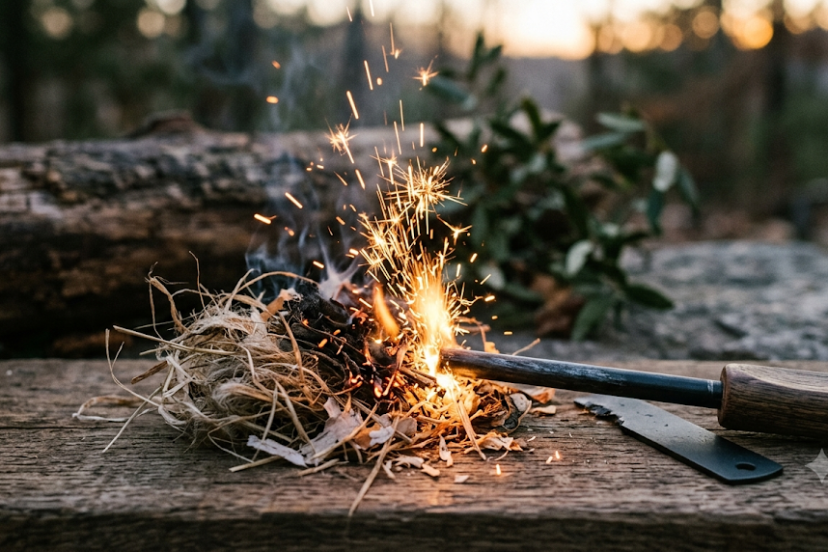
A ferro rod is a metal rod that throws a shower of sparks when scraped with a striker. It works when wet, survives thousands of uses, and packs down small. The tradeoff is that it needs good tinder and a bit of practice, but most survivalists still consider it the most dependable option in almost any environment.
Magnesium Fire Starters
These combine a ferro rod with a magnesium block you can shave into tinder. Magnesium burns hotter than paper or wood, which helps in damp conditions, but shaving it takes time and the shavings can blow away in wind.
Waterproof and Stormproof Matches
A classic for a reason. Coated to resist moisture, stormproof matches will stay lit even in real wind and rain. They are lightweight, fast, and dead simple, but the tradeoff is a limited supply, so they work best as a backup rather than your only option.
Butane Lighters
Everyone knows a lighter. Convenient, cheap, and easy, but fuel runs out and performance drops off fast in extreme cold.
Rechargeable Plasma and Arc Lighters
A newer category worth taking seriously: windproof, flameless, and rechargeable by USB, which means no fuel to run dry. They are genuinely beginner-friendly since there is no flame to manage in the wind, though battery life is something to track on longer trips.
Primitive Fire Starters (Bow Drill, Flint and Steel)
The traditional side of fire-making. A great skill to learn and a real confidence-builder, but it requires practice, physical effort, and dry materials. Failure rate is high without experience, so this is a skill to build, not a primary plan.
Quick Picks: Best Fire Starters for Survival
| Category | Pick | Why it fits | Get it |
|---|---|---|---|
| Best Overall | Light My Fire FireSteel Army | 3/8″ ferro rod rated for roughly 12,000 strikes, works wet, trusted in outdoor and bushcraft kits for years | Check price (US) · Check price (Canada) |
| Best Value | bayite 4″ Ferro Rod Kit | Full ferro rod, paracord handle, and striker for under $10: an easy way to carry redundancy without spending much | Check price (US) · Check price (Canada) |
| Best for Wet Weather | UCO Stormproof Match Kit | 25 stormproof matches plus 3 strikers in a waterproof case, stays lit in real wind and rain, not just a drizzle | Check price (US) · Check price (Canada) |
| Best for Beginners | Rechargeable Plasma Arc Lighter | Windproof, flameless, USB rechargeable: the easiest fire starter to hand to someone who has never used a ferro rod | Check price (Survival Frog) · Check price (US) · Check price (Canada) |
Pricing and availability change, so we verify links periodically, but always confirm the current price at checkout. Want more options in one place? Browse the full fire starter kit lineup at Survival Frog.
How Do You Choose the Best Fire Starters for Survival?
Instead of buying the first fire starter you see, work through this framework:
- Skill level: New to fire-making? Start with a plasma lighter or stormproof matches before you rely on a ferro rod under pressure.
- Wet or humid climate: Prioritize a ferro rod and stormproof matches over anything that depends on a dry striking surface.
- Cold weather: Butane lighters struggle below freezing. A ferro rod or a rechargeable arc lighter with a charged battery holds up better.
- Altitude and wind: Wind kills flames fast. Stormproof matches and windproof arc lighters are built specifically for this problem.
- Redundancy: Never carry just one. The best survival kits pair a primary fire starter with at least one backup that fails differently.
Top Picks: A Closer Look
Best Overall: Light My Fire FireSteel Army
If you could only carry one fire starter, this is the one to grab first. The 3/8-inch rod is thick enough to survive years of regular use, it throws hot, consistent sparks even when the rod itself is wet, and the wide handle stays grippy with cold or gloved hands. It does not rely on fuel, so there is nothing to run dry in the field.
Best Value: bayite 4″ Ferro Rod Kit
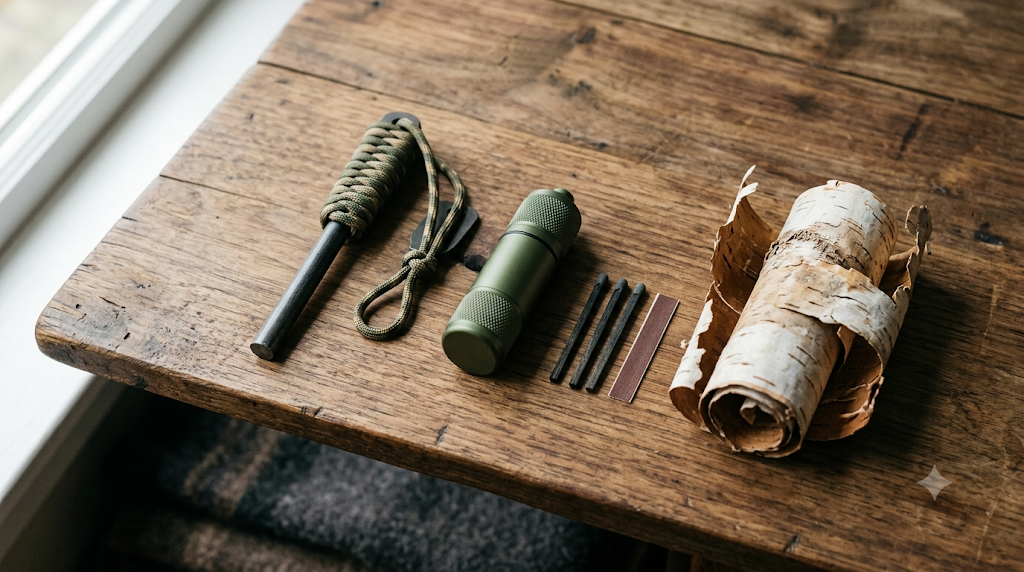
For under $10, this kit gives you a real ferro rod, a striker, and a paracord lanyard handle. It will not outlast a premium rod over years of hard use, but as a backup in a second kit, a vehicle kit, or a kid’s first fire-starting practice tool, it is an easy way to build in redundancy without spending much.
Best for Wet Weather: UCO Stormproof Match Kit
A case of these earns a permanent spot in any kit. Stormproof matches burn like a mini torch and will stay lit through wind and rain that would snuff out a regular match instantly. The waterproof case keeps all 25 matches and the strikers dry until you actually need them, which matters more than people expect after the first time a “waterproof” bag fails.
Best for Beginners: Rechargeable Plasma Arc Lighter
This is the fire starter to hand to someone who has never tried to strike a ferro rod. There is no flame to shield from wind, no fuel to run out, and the dual-arc design lights tinder in seconds. The real tradeoff is battery life: charge it before every trip and treat it as a primary tool for short outings, not a guaranteed backup for a multi-day scenario.
How Do You Use the Best Fire Starters for Survival Effectively?
The tool matters less than the technique. Here is what actually gets a fire going.
Preparing Tinder and Kindling
Dry leaves, cotton balls rubbed with petroleum jelly, birch bark, or feather sticks all work well. The goal is material that is light, fluffy, and genuinely dry, not just dry-looking.
Building a Fire Lay
- Teepee: good for fast ignition and getting a young fire established quickly.
- Log cabin: provides a longer, steadier burn once the fire is going.
- Lean-to: best for wind protection when conditions are rough.
Striking Sparks Correctly
Hold your ferro rod close to the tinder and pull the striker toward you in one firm motion. Avoid flailing sparks into open air. Direct every spark where you actually want ignition to happen.
Common Mistakes to Avoid
- Using tinder that looks dry but still holds moisture.
- Building too large a fire too soon, before the base is established.
- Relying on only one fire starter for an entire trip.
How Do You Use Fire Safely and Responsibly?
Warmth and cooking are not worth an out-of-control fire. Because nine out of ten wildfires are human-caused, a few habits matter every time you light one.
- Check for fire bans first. Conditions can turn a normal campfire into a serious violation during drought periods, so check current restrictions through the US Forest Service fire safety page before you strike a spark.
- Clear the area. Remove leaves and debris around your fire site, and keep a shovel and water nearby.
- Never leave a fire unattended, even for a few minutes.
- Extinguish completely. Douse with water, stir the ashes, and douse again. If it is too hot to touch, it is not out.
For broader guidance on responsible outdoor fire use, Ready.gov’s wildfire preparedness page is a solid starting point, and Leave No Trace’s fire principles are worth reading before any extended trip.
Which of the Best Fire Starters for Survival Fits Your Scenario?
Apartment or Urban Emergency Kit
A rechargeable plasma lighter is easy to store, easy to use, and does not require open-flame practice indoors. Pair it with stormproof matches as a no-battery backup.
Vehicle Kit
Heat and cold cycles in a car are hard on gear. A ferro rod handles temperature swings better than most lighters, and a spare bayite rod costs little enough to leave in the glovebox permanently.
Winter or Cold-Weather Kit
Cold drains batteries and stiffens butane. Lean on a ferro rod as your primary, and if you are also planning shelter and warmth for winter conditions, pair this with our Cold Weather Survival guide.
Wilderness or Backcountry Kit
Redundancy matters most here. Carry a primary ferro rod, a backup stormproof match case, and the knife you will need to process dry wood into usable tinder. See our Best Survival Knives guide for that pairing.
Why Redundancy Matters More Than Any Single Fire Starter
Rain and high humidity are what expose a weak fire-starting setup fastest. Matches turn to mush, lighters get too damp to spark reliably, and even a good ferro rod needs dry tinder, bark shavings work well, and a steady hand before it throws a spark that catches.
The lesson holds no matter which fire starter you carry: redundancy is everything. Never depend on a single fire starter, no matter how good it is.
Building out the rest of your kit?
Get our free 72-Hour Emergency Checklist: a two-page printable PDF delivered by email, covering the essentials in a grab-and-go format.
A Quick Word of Encouragement
You do not need a fully stocked fire kit today. Start with one reliable fire starter, learn to use it well, and add a backup when you can. Practice a few times in your backyard before you ever need it in the field. Small, consistent steps like this build real confidence, and that confidence is worth more than any single piece of gear.
FAQ: Best Fire Starters for Survival
Which fire starter works best in the rain?
A ferro rod paired with stormproof matches is the safest combination. Both keep working when standard matches and butane lighters fail.
Can you fly with a fire starter in carry-on luggage?
Ferro rods are generally allowed, but lighters and matches often face restrictions. Always check current airline and TSA rules before you pack one for a trip.
Do ferro rods wear out?
Yes, but a quality rod can last thousands of strikes, which typically means years of regular use in survival scenarios.
Is a rechargeable plasma lighter reliable for survival use?
It is a strong beginner-friendly option for short trips, but battery life is a real limitation. Pair it with a fuel-free backup like a ferro rod for longer or more serious trips.
How many fire starters should I actually carry?
At minimum, two that fail differently: for example, a ferro rod plus stormproof matches, or a plasma lighter plus a ferro rod. Redundancy is the entire point.
Final Thoughts: The Best Fire Starters for Survival
If there is one rule for choosing the best fire starters for survival, it is that redundancy is non-negotiable. Do not carry just one fire starter. A dependable trio is a ferro rod, stormproof matches, and a charged plasma lighter, each tucked into a different part of your kit so one bad day cannot take out all three at once.
Next step: pick your primary fire starter from the categories above, add one backup that fails differently, and practice with both before you actually need them.