Best Survival Knives: Choosing the Right Blade for Any Situation
J.T. Wilder | Survival strategist, Survival Tactix | Last updated: September 26, 2026.
Disclosure: This article may contain affiliate links. If you buy through these links, Survival Tactix may earn a commission at no extra cost to you. We only recommend products that fit the preparedness scenario and reader need. As an Amazon Associate, SurvivalTactix earns from qualifying purchases.
When the world strips away its comforts, whether food, shelter, or safety, one tool stands as your constant companion: the survival knife. Whether you’re a weekend camper, an outdoor adventurer, or someone building a bug-out bag, the right knife can be the difference between hardship and getting through it.
With hundreds of options on the market, the question isn’t “which knife is best” in the abstract. It’s which knife fits your environment, skill level, and budget. This guide breaks down what actually matters, ranks the strongest picks by category, and gives you a framework for choosing instead of just a list to scroll past.
Why a Survival Knife Is Your Lifeline
A survival knife isn’t just another tool. It’s your most-used one. From cutting cordage to processing firewood, from building a shelter to preparing food, its uses cover nearly every category of a survival situation. Campers use them for food prep, hikers for clearing brush, and in an urban setting, a reliable knife can even cut a seatbelt after a car accident.
Picture a camping trip where a sudden downpour snaps your tent poles an hour before dark. With nothing but a solid fixed-blade knife, you can cut branches, trim cordage and put up a lean-to that keeps you dry through the storm. That is the whole case for carrying a good one: when other gear fails, the knife is what lets you improvise.
Key Features of a Great Survival Knife
Fixed blade vs. folding blade
Folding knives are convenient for everyday carry, but for heavy-duty survival tasks, a fixed blade wins: sturdier, safer under load, and built to handle batoning wood or prying without flexing at a hinge.
Full tang construction
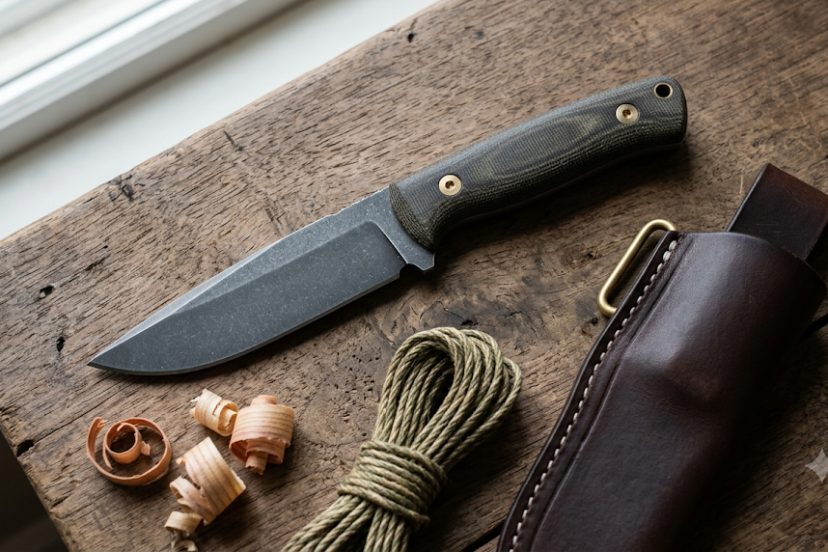
“Full tang” means the steel of the blade extends through the entire handle. This makes the knife far stronger and less likely to snap under pressure. Think of it as the knife’s backbone.
Blade length and thickness
The sweet spot for survival knives is usually 4 to 6 inches of blade length. Too short, and it won’t handle chopping tasks; too long, and it gets clumsy for fine work. A spine thickness of 3-5mm balances durability against unnecessary weight.
Steel types: carbon vs. stainless
Carbon steel is tough, easy to sharpen in the field, and holds an edge well, but rusts if not cared for. Stainless steel resists corrosion, which matters in wet or coastal environments, though it can be slower to resharpen. Forest and damp climates tend to favor stainless; dry climates make carbon steel’s edge-holding an easier tradeoff.
Handle and Grip: Comfort Meets Control
Micarta handles are durable and grip well in all conditions. Rubberized grips add slip resistance in wet environments. Wood handles look great but hold up less well in extreme conditions. A good handle should feel like a natural extension of your hand: look for finger grooves, a guard, and texture, not just a polished look.
Quick Picks: Best Survival Knives
| Category | Pick | Why it fits | Get it |
|---|---|---|---|
| Best Overall | ESEE-6 (1095 carbon steel, full tang) | 5.75-inch full-tang fixed blade, Micarta handle, backed by ESEE’s lifetime no-questions warranty |
Check price (US) · Check price (Canada) |
| Best Value | Morakniv Companion Heavy Duty | 4.1-inch stainless blade, lightweight, razor-sharp out of the box: proof a good knife doesn’t need to be expensive |
Check price (US) · Check price (Canada) |
| Best for Heavy-Duty / Batoning | KA-BAR Becker BK2 Companion | 5.25-inch, quarter-inch-thick full-tang blade built to take a beating on chopping and batoning tasks |
Check price (US) · Check price (Canada) |
| Best Folding | Benchmade Bugout 535 | 1.85 oz, CPM-S30V drop-point blade, AXIS lock: the lightest practical option for everyday carry |
Check price (US) · Check price (ships to Canada) |
Pricing and availability change, so we verify links periodically, but always confirm current price at checkout.
How to Choose the Right Survival Knife: A Decision Framework
- Forest or damp climate: a stainless-steel fixed blade resists corrosion better through humidity and rain.
- Desert or dry climate: carbon steel’s edge-holding is an easier tradeoff when rust risk is lower.
- Heavy bushcraft, batoning, building shelter: a thick, full-tang fixed blade in the 5-6 inch range, like the BK2 or ESEE-6.
- Everyday carry / urban preparedness: a lightweight folding knife you’ll actually have on you, like the Bugout.
- First survival knife on a budget: the Morakniv Companion, sharp, dependable, and inexpensive enough to actually use and learn on.
- Family or vehicle kit: a basic fixed blade per kit, stored in a dry sheath, is more useful than one expensive knife everyone has to share.
Top Picks: A Closer Look
Best Overall: ESEE-6
The ESEE-6 earns its reputation. Full-tang 1095 carbon steel, a 5.75-inch blade, and a Micarta handle that stays grippy wet or dry. ESEE backs it with a genuine no-questions lifetime warranty: a real signal of confidence, not just marketing copy. The tradeoff is price: it costs more than a Morakniv, but for a knife meant to be your single most relied-upon tool, that’s a reasonable place to spend.
Best Value: Morakniv Companion Heavy Duty
Budget-friendly and genuinely dependable, not just “good for the price.” Lightweight, comes shaving-sharp out of the box, and easy to resharpen. It lacks the chopping heft of a thicker blade, so it’s better suited to carving, food prep, and fine tasks than heavy batoning. A smart first knife or a great backup in a second kit.
Best for Heavy-Duty Work: KA-BAR Becker BK2
The BK2 is built like a small axe with an edge. A quarter-inch-thick spine and full-tang construction mean it shrugs off batoning and prying that would risk damaging a thinner blade. It’s heavier than the others here, which is the honest tradeoff: comfortable for camp use, less ideal as an all-day carry.
Best Folding: Benchmade Bugout 535
At 1.85 ounces, the Bugout disappears in a pocket, which matters because the best knife is the one you actually have on you. CPM-S30V steel holds an edge well, and the AXIS lock opens and closes smoothly with one hand. It’s not a batoning knife: folding knives aren’t built for that kind of lateral stress, but for everyday carry and light field tasks, it’s hard to beat.
Serrated vs. Plain Edge: Which One Wins?
Serrated edges excel at cutting rope, fabric, or fibrous material. They saw rather than slice. The tradeoff is that they’re harder to sharpen in the field. Plain edges are more versatile: easier to maintain, better for carving wood, and ideal for precision tasks like food prep. If you can only carry one, the plain edge is the more flexible choice.
Knife Care and Maintenance
Sharpening
Keep a small field sharpener in your kit. Regular touch-ups are far easier than fixing a dull, chipped edge later.
Cleaning
Wipe the blade down after use, apply a thin coat of oil to prevent rust (especially on carbon steel), and avoid storing it in a damp sheath.
Storage
Store in a dry place. Leather sheaths look good but trap moisture over time: Kydex or nylon hold up better for long-term storage.
Common Mistakes to Avoid
- Buying a “cool” knife instead of a practical one. An oversized, movie-style blade looks intimidating but is rarely the most useful tool in your pack.
- Neglecting maintenance. Even the best steel will dull or rust if ignored.
- Choosing the wrong size. Too big is cumbersome; too small struggles with heavy tasks. Stick to the 4-6 inch sweet spot for a primary fixed blade.
Know your local laws before you travel
Knife laws vary by state, province, and country, and airline rules add another layer. Knives are not allowed in carry-on luggage under current TSA rules but are generally fine in checked bags when sheathed. Always confirm local blade-length and carry laws before you pack one for a trip.
The American Knife & Tool Institute’s state knife law directory is the most current, widely-cited source for state-by-state blade length and carry rules if you’re traveling or unsure what’s legal where you live.
Matching a Knife to Your Kit
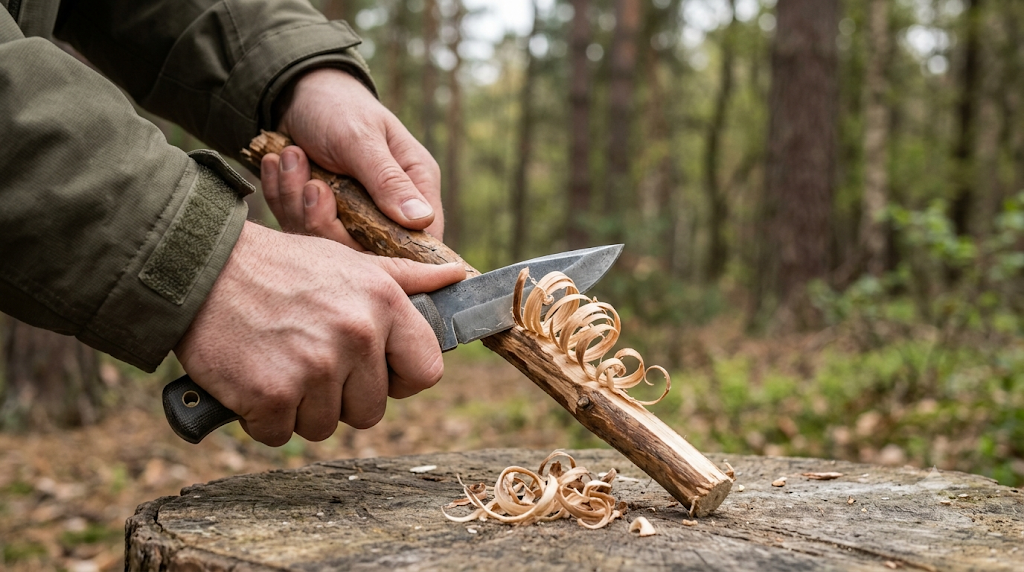
If you’re also building out fire-starting gear, see our Best Fire Starters guide. A knife is what turns a stormproof match or ferro rod into usable tinder by processing dry wood into shavings and feather sticks. For broader kit planning, start with our Key Survival Products guide, and if you’re prepping for winter, pair your knife choice with our Cold Weather Survival guide. Cold affects grip and dexterity more than most people expect.
Why Does Grip Comfort Matter More Than the Spec Sheet?
A knife can tick every box on paper and still feel awkward in hand. Hard, slick or narrow handles are the usual culprits: after a long day of carving, batoning or food prep, they rub hot spots and blisters into your palm. A simple, well-shaped rubber or textured grip often makes a bigger difference than a premium steel. Comfort and balance matter more than a spec sheet suggests: if you can, hold a knife before you commit to it, or read reviews from people who’ve used it for hours, not minutes.
A Quick Word of Encouragement
Building out your gear doesn’t have to happen all at once. You do not need the perfect knife collection today. Pick one solid, practical blade that fits your environment, learn to maintain it, and build from there. Small, deliberate choices compound into real preparedness over time. That’s how a dependable kit gets built. One good decision at a time.
FAQ: Survival Knives
What’s the best all-around survival knife?
The ESEE-6 is often considered the most versatile option: full-tang, durable, and backed by a genuine lifetime warranty.
Can a survival knife replace an axe or machete?
Not entirely. A good knife handles a wide range of tasks, but axes and machetes are still better suited to heavy chopping over time.
How much should I spend on a good survival knife?
Most people land in the $50-150 range for a quality knife. The Morakniv Companion proves you don’t need to spend more than that to get something dependable.
Fixed blade or folding knife for survival?
A fixed blade is stronger for heavy-duty tasks like batoning and prying. A folding knife is what you’re more likely to actually carry every day. Many preparedness-minded people carry both.
Can I bring a survival knife on a plane?
Not in carry-on luggage under current TSA rules. Knives are generally allowed in checked baggage when properly sheathed: confirm with your airline before you travel.
Final Thoughts: Your Knife, Your Survival Partner
A survival knife isn’t just a piece of steel. It’s a tool you’ll reach for more than almost anything else in your kit. The right knife won’t just cut wood or rope; it removes one more source of friction from an already hard situation.
Start with one knife that matches your environment and budget, learn to maintain it, and add a second only once you understand what the first one is missing. That’s a more useful approach than buying the biggest blade on the shelf.
Sources referenced: AKTI State Knife Laws