Best Survival Tents for Emergencies and Extreme Weather
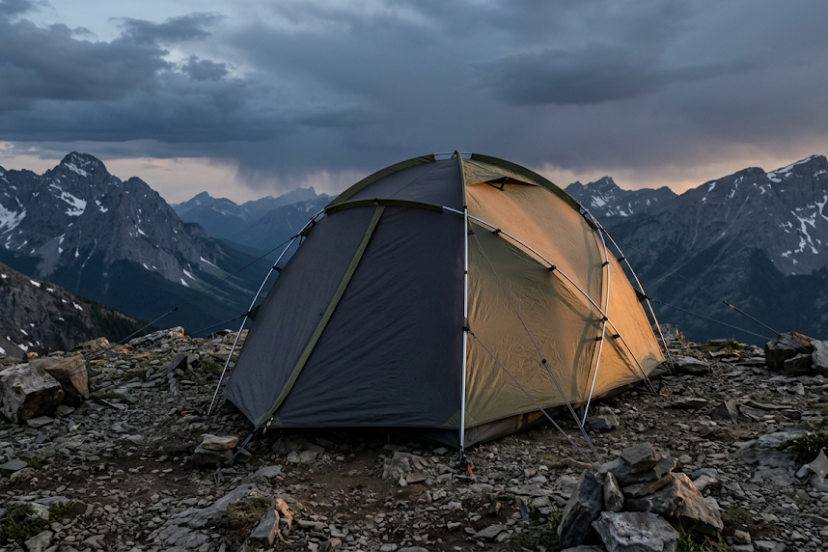
Quick Answer: The best survival tents balance storm-worthy structure with a fit for your real climate and mission. The Naturehike Cloud Up Pro is the best all-around pick: a freestanding 3-season dome that pitches fast and holds up in real wind and rain. Budget-conscious households do well with the Coleman Skydome, cold-climate preppers need a true 4-season tent like the MSR Access 2, and solo hikers who count ounces should look at the Naturehike Mongar UL. Match the tent to your climate and mission, not the other way around.
J.T. Wilder | Survival strategist, Survival Tactix | Last updated: September 25, 2026.
Disclosure: This article may contain affiliate links. If you buy through these links, Survival Tactix may earn a commission at no extra cost to you. We only recommend products that fit the preparedness scenario and reader need. As an Amazon Associate, SurvivalTactix earns from qualifying purchases.
When blue skies turn traitor, your tent becomes more than fabric and poles. It becomes your portable safe room. In a true emergency, the best survival tents keep wind at bay, shed heavy rain or snow, trap hard-won warmth, and restore enough calm for you to think clearly. This guide translates spec sheets into real-world choices, matching shelter types to your climate, your movement style, and your skill level.
Below, you will find a decision framework, four vetted product picks by category, and the field details that most gear roundups skip: condensation control, storm-proofing, and hot-tent safety.
Why Does Shelter Choice Matter So Much in a Real Emergency?
Shelter is the backbone of survival. A well-designed tent stabilizes body temperature, preserves morale, and buys time for better decisions. The wrong shelter, on the other hand, steals heat, floods the floor, and frays nerves at 3 a.m. Your goal is not just “a tent.” It is a storm-worthy system you can pitch fast, tension tight, repair on the fly, and trust when the forecast stops cooperating. That is exactly what separates the best survival tents from the rest.
If you are building a full kit rather than a single item, start with our Key Survival Products guide for the essentials that belong alongside your shelter, and see Being Prepared for Emergencies for how shelter fits into a broader family emergency plan.
What Types of Survival Tents Should You Consider?
Not all shelters are built for the same fight. Because environment and movement style drive the decision more than brand names do, match the archetype below to your actual conditions.
Dome Tents
Rounded, double-wall domes distribute wind and snow loads well. They are versatile, easy to pitch, and forgiving of an imperfect site: a solid choice when stability matters more than shaving ounces.
Geodesic and Semi-Geodesic Tents
Multiple crossing poles create rigid triangles that resist deformation. These are “hold the line” shelters for exposed ridgelines or gusty, direction-shifting wind. Semi-geodesic designs trim weight while keeping most of that backbone.
Tunnel and Ridge Tents
Tunnels use arched hoops to create long, livable corridors with generous vestibules. Oriented nose-to-wind, they excel in gales and pitch quickly. Classic ridge and A-frame shelters are simpler and more repairable, though less bombproof than a geodesic.
Tipis and Hot Tents for Cold Weather
Single-pole cones shed snow efficiently and vent well. Paired with a small, properly vented stove, a hot tent can turn brutal cold into workable comfort. Because carbon monoxide risk rises fast in any heated shelter, always follow CDC carbon monoxide guidance before you light anything inside.
Bivy Sacks and Hooped Bivvies
Minimalist cocoons built for stealth and speed. They deploy fast and pack small, but livability is close to zero and condensation control becomes a skill rather than a feature. Best reserved for short stops or last-resort shelter.
For a go-bag or car kit, an emergency sleeping bag is the lightest last-resort layer you can carry. Survival Frog’s Tact Bivvy 2.0 is one option: Check price (Survival Frog). Think of it as a backup that keeps you going until you reach real shelter, not a replacement for a tent.
Ultralight Mids and Emergency Tarps
Pyramid shelters, or “mids,” pitch on a center pole, present a low wind profile, and handle surprising snow loads when guyed correctly. Add an inner tent, groundsheet, or door as conditions demand.
At the simplest end, a tube tent strung between two trees gives basic cover from rain for very little weight or cost. The Ready Shelter Tube Tent from Survival Frog is one example: Check price (Survival Frog). Treat it as an emergency backup, not a storm shelter.
Quick Picks: Best Survival Tents
| Category | Pick | Why it fits | Get it |
|---|---|---|---|
| Best Overall | Naturehike Cloud Up Pro | Freestanding 3-season dome with color-coded double-Y aluminum poles for a fast pitch, durable 20D nylon rated to PU3000mm+, strong livability-to-weight ratio for the price | Check price (US) · Check price (Canada) |
| Best Value / Budget | Coleman Skydome (4-Person, Full-Fly Vestibule) | Under $150, WeatherTec-sealed floor and full-coverage rainfly, 5-minute setup: proof a budget tent can still shed real weather | Check price (US) · Check price (Canada) |
| Best 4-Season | MSR Access 2 | True four-season structure without a mountaineering-tent weight penalty: extra pole strength for snow load and wind, still under 4 lbs | Check price (US) |
| Best Ultralight | Naturehike Mongar UL | Freestanding 3-season ultralight tent at about 3.3 lb, near-vertical walls for real interior space, built for hikers and preppers who need to move fast and light | Check price (US) · Check price (Canada) |
Canadian availability: the Coleman Skydome, Naturehike Cloud Up Pro, and Naturehike Mongar UL all have direct Amazon.ca listings. The MSR Access 2 is not carried on Amazon.ca at all, so Canadian readers will need an outdoor specialist for that one.
Pricing and availability change, so we verify links periodically, but always confirm the current price at checkout.
How Do You Choose the Right Survival Tents for Your Situation?
Instead of chasing the “best” tent in the abstract, work through this framework in order:
- Mission and season: What is the worst realistic weather you will actually face?
- Movement style: Car-based, on-foot, or a mix of both?
- Team and gear: Size up one person from your real headcount for sanity and gear sprawl.
- Archetype fit: Dome, geodesic, tunnel, mid, or hot tent?
- Storm strategy: Guy-out points, pole strength, and snow-shedding wall angles.
- Weight versus strength: Save ounces only when the structure stays trustworthy.
- Practice and proof: Can you pitch it fast, in the dark, with cold hands?
Because your climate does more to determine the right tent than any single feature, use this as your starting filter: sheltered, mild winters can often work with a strong 3-season tent and smart site selection. Exposed alpine terrain, sustained sub-freezing temperatures, or heavy snow load call for a true 4-season design.
Top Survival Tent Picks: A Closer Look
Best Overall: Naturehike Cloud Up Pro
The Cloud Up Pro earns its spot as a genuine all-arounder. It is freestanding, so you can pitch it on rock, sand, or a wooden platform without needing perfect staking ground. Color-coded double-Y aluminum poles and a straightforward setup mean you can be inside and dry within a few minutes, even in a downpour. The tradeoff is that it is a 3-season tent: strong against wind and rain, but not built for sustained heavy snow load. For most households planning for storms, power outages, or a fast bug-out, that tradeoff makes sense.
Best Value: Coleman Skydome (Full-Fly Vestibule)
Budget-friendly does not have to mean flimsy. The Skydome’s WeatherTec-sealed floor and full-coverage rainfly keep water out where cheaper tents typically fail: at the seams and the door zippers. It lacks the pole rigidity of a true backpacking tent, so it is better suited to car-based or backyard-adjacent emergency use than to sustained high-wind exposure. As a first tent, a family backup, or a second shelter in a vehicle kit, it is hard to beat for the price.
Best 4-Season: MSR Access 2
The Access 2 solves a real problem: most true winter tents are heavy expedition gear, and most lightweight tents cannot handle real snow load. MSR built the Access with an extra pole for structural strength against wind and snow while keeping the weight close to a 3-season tent. If your emergency planning includes exposed terrain, sustained cold, or unpredictable winter storms, this is the category to invest in: the tradeoff is cost, which runs higher than a 3-season dome.
Best Ultralight: Naturehike Mongar UL
At about 3.3 pounds, the Mongar UL disappears into a pack, which matters because the best emergency tent is the one you actually have with you when the weather turns. Near-vertical walls give it more usable interior space than most ultralight tents manage. It is not built for sustained 4-season abuse. Treat it as a 3-season shelter for hikers, preppers on foot, and anyone who needs to move fast without sacrificing real protection.
What Features Should Every Survival Tent Have?
- Structure you trust: aluminum poles, smart geometry, and enough guy-out points to handle real wind.
- Weatherproofing that lasts: tightly sealed seams, refreshable DWR coating, and a fly that actually covers the tent body.
- Ventilation for condensation control: peak vents, mesh panels, and doors you can adjust without fully opening them.
- Space for people and gear: true-to-spec floor area, plus a vestibule for wet boots and packs.
- Fast, intuitive setup: color-coded poles, external sleeves, and a pitch sequence you do not have to relearn every time.
- Repairability: standard pole diameters, accessible zippers, and field-serviceable parts.
How Are Survival Tents Different From Regular Camping Tents?
Camping tents assume fair weather and short trips. The best survival tents assume stress, fatigue, and storms. Because of that difference, expect heavier fabrics, more tie-out points, and sturdier pole structures on a true survival-rated tent. You pay a small weight tax, but you gain real resilience when conditions turn, and conditions are exactly what you cannot control in an emergency.
What Weatherproofing Upgrades Do the Best Survival Tents Actually Need?
These upgrades are what separate real survival tents from fair-weather camping gear. Hydrostatic head ratings matter: think 1,500 to 3,000 mm for flies and 3,000 to 10,000 mm for floors, but they do not tell the whole story. Seam construction, fabric tension, and pitch angle matter just as much. Condensation, meanwhile, is physics, not failure. In practice, prioritize peak vents, cross-flow airflow, and a small fly-to-ground gap when wind allows it.
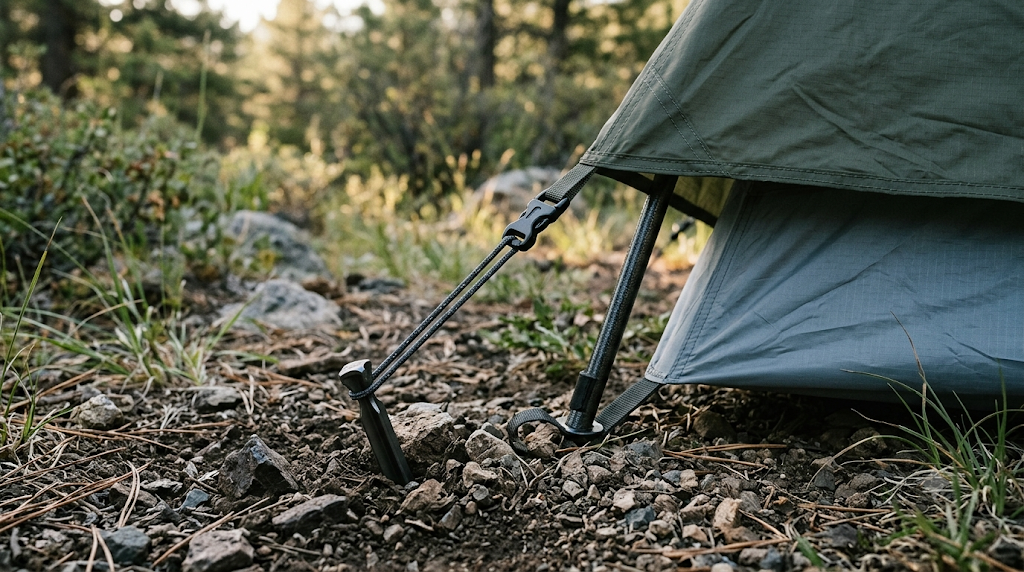
Factory-fresh does not always mean field-ready. Seam-seal the floor perimeter and any manufacturer-recommended stitch lines before your first real trip. Add higher-quality guylines and line-locs where the factory setup is thin. A mixed stake kit, with shepherd hooks for standard soil, Y-stakes for grip, and dedicated stakes for snow or sand, closes most of the remaining gap. For storm-safety fundamentals beyond gear, the National Weather Service safety hub is worth bookmarking.
Are Hot Tents and Stoves Safe to Use Inside a Shelter?
Warmth without safety is a trap. If you use a stove inside a tent, you must ventilate aggressively, run a spark arrestor, protect the floor, and keep the stove-jack area clear at all times. Keep a heat-resistant glove and a small carbon monoxide monitor in any winter kit that includes a hot tent. For the fundamentals and warning signs, start with the CDC’s carbon monoxide basics and the CDC CO poisoning fact sheet.
How Do You Pick the Right Campsite for Survival Tents in an Emergency?
Pitch like you are pouring water on the landscape and watching where it flows. Avoid depressions that turn into puddles, but also skip ridge crests that funnel wind straight at your door. Tuck behind a natural windbreak, then look up for dead limbs before you commit to the spot. In snow, stomp a platform and let it set before pitching. In sand, bury deadmen anchors or use wide-blade stakes. For broader site-selection guidance, Ready.gov’s shelter guidance is a solid starting point.
How Do You Maintain the Best Survival Tents for the Long Term?
Dry your shelter after every use before you store it. Store it loosely rather than compressed, since tight compression breaks down waterproof coatings over time. Lubricate zippers sparingly, and refresh DWR coating once water stops beading on the fly. Patch small pinholes early, before they creep into tears you cannot field-fix. A survival tent is not just built well. It stays reliable because it is maintained like the rest of your emergency kit.
If your planning includes winter scenarios specifically, pair your tent choice with our Cold Weather Survival guide, and if you are building shelter skills beyond store-bought gear, see How to Build a Shelter for Survival.
Budget Tiers: What Are the Honest Tradeoffs?
Across every price point, the best survival tents share one trait: a structure you can trust before a storm ever tests it. Here is how the tiers break down.
- Entry tier: heavier fabrics, basic poles, acceptable waterproofing. A reasonable backup or fair-weather option.
- Mid tier: aluminum poles, smarter geometry, better stitching and ventilation. The real-world sweet spot for most households.
- Premium tier: advanced fabrics, geodesic or 4-season frames, snow-ready design. Worth the cost if storms or winter exposure are a regular part of your reality.
Building out the rest of your kit?
Get our free 72-Hour Emergency Checklist: a two-page printable PDF delivered by email, covering the essentials in a grab-and-go format.
A Quick Word of Encouragement
Building out a full shelter system does not have to happen in one weekend or one paycheck. You do not need the perfect four-season setup today. Start with one solid tent that matches your actual climate, learn to pitch it quickly, and practice once before you need it for real. Add a mixed stake kit and a repair kit when you can. Small, deliberate upgrades compound into real preparedness over time. That is how a dependable shelter system actually gets built.
FAQ: Survival Tents
What is the single most important feature in a survival tent?
Structure you can trust: every one of the best survival tents shares this trait. Strong poles, reinforced guy points, and storm-smart geometry keep the shelter upright. Waterproofing matters, but staying pitched in real wind matters more.
Do I need a four-season survival tent for winter?
Not always. Below the treeline, with predictable conditions, a strong 3-season tent can work with careful site selection. For heavy snow or exposed ridges, choose a true 4-season tent like the MSR Access 2, or a properly vented hot-tent setup.
What is the best bug-out tent for two people?
A semi-freestanding dome or mid with dual doors, generous vestibules, and fast setup is the right call. Size up to a “3-person” model if you are packing for two adults plus winter layers or a dog.
Are ultralight emergency shelters reliable in high winds?
They can be, if you respect their limits. Orient the tent correctly, tension it precisely, and use the right stakes or deadman anchors for your ground. Practice is what turns light gear into dependable shelter.
How do waterproof emergency tents compare to tarps?
Tents offer full-time bug defense, draft control, and easier heat retention. Tarps win on weight and modularity. In cold rain with insects present, a tent usually conserves more energy and morale than a tarp setup.
Final Thoughts: Choosing the Best Survival Tents for Your Situation
The right shelter turns chaos into control. You are trading grams for strength, dollars for durability, and minutes of practice for nights of real confidence. Start by matching an archetype to your climate and mission, then upgrade the small details that make the biggest difference in the field: stakes, guylines, and a repair kit. Rehearse the pitch until it feels automatic. When the night grows loud, you will have a tent that becomes home in minutes: warm, dry, and steady while the weather does its worst outside.
Next step: pick the category above that matches your real climate and movement style, not the one that looks best on a shelf, and get that single tent dialed in before you add a second.