Winter Storm Power Outage: The No-Heat Survival Guide
Fast track
Ten seconds to spare? Start with what’s safe to use for heat, then check the kit list.
Quick Answer: A house with no heat can drop into the danger zone faster than most people expect, especially for kids and older adults. The safe order is: confirm your heat source won’t produce carbon monoxide, protect the people most at risk first, keep pipes from freezing, and know the signs of hypothermia before you need to recognize them in someone you love.
J.T. Wilder | Survival strategist, Survival Tactix | Last updated: September 14, 2026
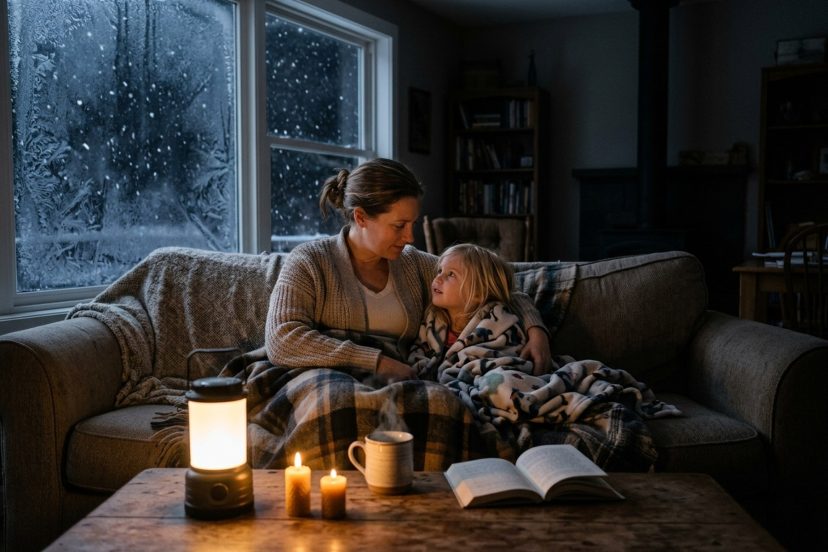
A summer blackout is miserable. A winter one is a different kind of problem, because cold doesn’t wait for you to figure things out the way heat does. Pipes can freeze in a single overnight low. A furnace that quietly stops running doesn’t announce itself the way a dead air conditioner does. And the fixes people reach for first, generators and unvented heaters, are exactly the ones that carry real risk if you get the details wrong.
None of this is a reason to panic. It’s a reason to have the order of operations straight before the storm knocks the power out, not while you’re standing in a cold, dark living room trying to remember whether it’s safe to run a generator in the garage with the door open (it isn’t). This guide walks through what actually keeps a household safe and warm when the grid goes down in the cold, starting with the one heat option worth having on hand: an indoor-safe propane heater that doesn’t depend on the power being back on.
Jump to: How Cold It Actually Gets • Recognizing Hypothermia • Safe Heat Sources • Generator Safety • Protecting Your Pipes • Downed Power Lines • Who’s Most at Risk • The Blackout Kit • FAQ
Affiliate disclosure: This article may contain affiliate links. If you buy through these links, SurvivalTactix may earn a commission at no extra cost to you. We only recommend products that fit the scenario and the reader’s actual need.
How Cold Does a House Actually Get Without Heat?
Faster than you’d think, and it depends more on your home’s insulation than the outdoor temperature alone. A well-sealed house can hold reasonable warmth for most of a day. An older or drafty one can lose 20 to 30 degrees overnight. The World Health Organization’s housing and health guidelines put the minimum healthy indoor temperature at 64.4°F (18°C) for a general household, rising to 68–70°F (20–21°C) for rooms where elderly people spend most of their time. Below that range, the research links cold indoor air to real, measurable health effects, not just discomfort: higher blood pressure, worse respiratory symptoms, and slower recovery from illness.
The practical takeaway: don’t wait for the thermostat to hit an alarming number before you act. If your home is dropping toward the low 60s and staying there, it’s time to consolidate into one warm room, add a safe heat source, and start watching the people in your house who are most vulnerable to cold a little more closely.
At a Glance: Heat Source Options When the Power’s Out
| Option | Works With No Grid Power? | Carbon Monoxide Risk | Best For |
|---|---|---|---|
| Indoor-safe portable propane heater | Yes, no electricity needed | Low, if it has an oxygen-depletion sensor, a CO detector nearby, and a cracked window | A single room, multi-day outages, no generator |
| Portable power station + electric space heater | Yes, as long as it’s charged | None | Apartments, short outages, easiest to use safely |
| Gas or propane generator + electric heater | Yes, as long as it has fuel | High if run indoors, in a garage, or too close to the house | Whole-house needs, multi-day outages |
| Wood-burning fireplace or stove | Yes, if you have dry wood | Low, if the flue or chimney is clear | Homes that already have one installed |
| Layering, body heat, and a sealed single room | Yes, always available | None | Everyone, as the baseline backup with zero gear |
How Do You Recognize Hypothermia Before It Gets Dangerous?
Hypothermia doesn’t require a blizzard outside. It can happen inside a cold house, especially to someone who’s been sitting still for hours under-dressed. The CDC lists the signs to watch for in adults: shivering, exhaustion or unusual confusion, fumbling hands, memory loss, slurred speech, and drowsiness. In infants, the signs look different and are easy to miss: bright red, cold skin, and unusually low energy, a baby who seems limp or won’t wake up easily to feed.
If you notice these signs in anyone in your home, the response is the same regardless of the cause: get the person into dry, warm layers, warm the core of the body first (chest, neck, head, groin) rather than rubbing the extremities, and if confusion or slurred speech doesn’t clear up quickly, treat it as a medical emergency and get help. Don’t wait for it to look severe. Mild hypothermia is far easier to reverse than moderate hypothermia.
Emergency thermal blankets, on hand before you need them
A 10-pack of mylar thermal blankets costs less than one takeout dinner and gives every person in the house, plus a couple of guests, an immediate way to trap body heat if the main heat source fails.
What’s Actually Safe to Use for Heat Indoors?
Not every heater sold for camping or job sites is rated for indoor use, and that distinction matters more than almost anything else in this guide. An indoor-safe portable propane heater has a built-in oxygen-depletion sensor that shuts the unit off automatically if oxygen levels start to drop, which is the feature that separates “safe in a closed room” from “a real hazard.” Even with that safeguard, the Consumer Product Safety Commission’s own guidance is to keep at least 3 feet of clearance from anything flammable, crack a window for fresh air exchange, and pair it with a working carbon monoxide detector in the same room, every time, no exceptions.
Kerosene heaters, charcoal, and camp stoves are not the same category. They aren’t built with the same safety features and shouldn’t be used indoors regardless of how careful you plan to be.
The indoor-safe heater worth keeping in the closet
The Mr. Heater Buddy is the model most often recommended for exactly this scenario: a built-in oxygen-depletion sensor, no electricity required, and enough output (up to 9,000 BTU) to keep one room genuinely warm.
How Do You Run a Generator Without Risking Carbon Monoxide?
This is the section worth reading twice. The Consumer Product Safety Commission estimates that roughly 100 people die every year from generator-related carbon monoxide poisoning in the United States, and nearly all of those deaths trace back to the same handful of mistakes: running a generator in an attached garage, on a porch, or too close to a window or vent, even with a door “cracked open.” CO is colorless and odorless, and by the time you notice symptoms, you’re already exposed.
The rule that matters: a generator needs to run at least 20 feet from your home, with the exhaust pointed away from windows, doors, and vents. Never run one in a garage, basement, or crawlspace, even temporarily. If your household includes anyone with limited mobility, a generator’s distance requirement is exactly the reason a portable power station, which produces zero exhaust and can run inside, is worth having as the primary plan rather than the backup.
A carbon monoxide detector is not optional
If your home has any combustion appliance, a fireplace, or a generator anywhere near it, a plug-in CO detector with battery backup keeps working even when the outlet it’s plugged into doesn’t.
Or skip the exhaust question entirely
A mid-size portable power station (around 1,000Wh) runs a space heater, medical devices, and a router indoors with no fuel, no exhaust, and no 20-foot rule to manage.
How Do You Keep Pipes From Freezing and Bursting?
Frozen pipes are a homeowner’s problem you can mostly prevent, and a burst pipe is one you really don’t want to deal with on top of a power outage. As a rule of thumb, exposed or poorly insulated pipes start to freeze once sustained outdoor temperatures drop to around 20°F, well before water itself would freeze on its own, because wind and wall cavities pull heat away faster than still air does.
If the power’s out and the forecast is dropping toward that range, open cabinet doors under sinks on exterior walls so warm room air can reach the pipes, and let faucets fed by exposed pipes drip slightly, moving water is much more resistant to freezing than standing water. If a pipe does freeze before it bursts, thaw it slowly with a hair dryer, a space heater a safe distance away, or towels soaked in hot water, working from the faucet end toward the blockage. Never use a blowtorch or other open flame on a pipe. And know where your main water shutoff valve is before you need it in the dark; that single piece of knowledge is the difference between a wet pipe and a flooded basement.
What Do You Do About Downed Power Lines After an Ice Storm?
Ice and heavy wet snow are the two things most likely to bring lines down, and a downed line is one of the few hazards in this guide where the right answer is simply distance. Treat every downed line as energized, even if it looks dead, even if the power in your house is already out. State emergency management guidance is consistent on this: stay back at least 25 feet, keep kids and pets well clear, and don’t touch anything the line is resting on, including a fence, a car, or standing water.
Report it to your utility company and 911 rather than moving it yourself, no matter how tempting it is to just drag it off the driveway. If a line falls on your car while you’re inside, stay put with the windows up and wait for utility crews or first responders to confirm it’s safe, unless there’s fire, in which case jump clear with both feet together and shuffle away without letting any part of your body touch the car and ground at the same time.
Who’s Most at Risk When the Heat Goes Out?
Cold affects people unevenly. Infants lose body heat faster than adults and can’t tell you when something’s wrong. Older adults often have a reduced ability to sense cold and may not shiver even as their core temperature drops, which is exactly why hypothermia in elderly people can go unnoticed. Anyone with certain heart conditions, diabetes, or who’s taking medications that affect circulation faces higher risk too. If your household includes any of these, that’s the room that gets the safe heat source first, not last.
Check on at-risk neighbors and family members during an extended outage, not just your own household. A five-minute knock on the door has caught more than one dangerous situation before it became an emergency.
Light that doesn’t compete for your hands
Checking on someone, thawing a pipe, or setting up a heater in the dark all go faster with both hands free. A rechargeable headlamp does that job better than a phone flashlight ever will.
Calm + Courage: None of this requires you to become a different kind of person overnight. A cold house with a plan is a manageable few days. A cold house with no plan is where real danger creeps in, quietly, one bad decision at a time. You don’t need to get everything on this page perfect. You need the heat source sorted, the at-risk person warm first, and the number for your utility company saved somewhere you can find it without power. Start there, and build the rest as you go.
Building a No-Heat Winter Blackout Kit
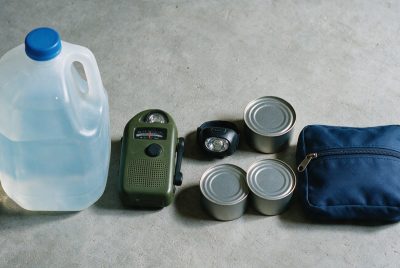
Beyond the heat source itself, a handful of items make a multi-day cold-weather outage genuinely manageable instead of just endurable:
NOAA hand-crank emergency radio — your information line when cell towers and Wi-Fi both go down.
Rechargeable LED lantern — safer than candles around kids and pets, and it lights a whole room instead of one spot.
Freeze-dried emergency food supply — no refrigeration or much water needed, which matters when your stove is also down.
20,000mAh power bank — keeps phones alive for the radio app, the weather alerts, and checking on family, even after the power station is tied up running the heater.
Calm + Courage: None of this requires you to become a different kind of person overnight. A cold house with a plan is a manageable few days. A cold house with no plan is where real danger creeps in, quietly, one bad decision at a time. You don’t need to get everything on this page perfect. You need the heat source sorted, the at-risk person warm first, and the number for your utility company saved somewhere you can find it without power. Start there, and build the rest as you go.
FAQ
How cold can a house get in a power outage before it’s dangerous?
WHO housing and health guidelines set 64.4°F (18°C) as the minimum healthy indoor temperature, rising to 68–70°F for rooms where elderly people spend most of their time. Below that range for an extended period, cold indoor air is linked to real health effects, not just discomfort.
Is it safe to run a generator in a garage with the door open?
No. The CPSC is explicit on this: an open garage door does not make a generator safe to run inside. Keep it at least 20 feet from the house with the exhaust pointed away from windows, doors, and vents.
Can I use a propane heater indoors?
Only one specifically rated for indoor use, with a built-in oxygen-depletion sensor. Pair it with a working CO detector, keep 3 feet of clearance from anything flammable, and crack a window for airflow.
At what temperature do pipes freeze?
Exposed or poorly insulated pipes commonly start freezing once sustained outdoor temperatures reach around 20°F. Drip faucets on exterior-wall plumbing and know your main shutoff valve location before that point.
What should I do if I see a downed power line after an ice storm?
Stay back at least 25 feet, treat it as live even if the power looks off, and report it to your utility company and 911. Don’t touch it or anything it’s resting on.
How do I know if someone has hypothermia?
In adults: shivering, confusion, fumbling hands, slurred speech, and drowsiness. In infants: bright red, cold skin, and unusually low energy. Warm the person’s core first and treat confusion or slurred speech that doesn’t clear quickly as an emergency.
Resources
Trusted external resources
- WHO Housing and Health Guidelines — indoor cold and health
- CDC — Recognizing Hypothermia
- U.S. Consumer Product Safety Commission — Generator and CO Safety
- Michigan Public Service Commission — Downed Power Line and Winter Storm Safety
Related SurvivalTactix guides
Next step
Getting through a no-heat night is half of the winter-storm problem. A written 72-hour plan handles the rest, water, food, communication, and a checklist you’re not trying to build from memory in the cold.