Extreme Heat, No Power: The No-AC Survival Guide for Blackout Season
J.T. Wilder | Survival strategist, Survival Tactix | Last updated: September 17, 2026
Quick Answer: When the power goes out during extreme heat, work in this order. Get airflow moving across wet skin. Block direct sun from windows. Drink water on a schedule, not just when thirsty. And know your nearest cooling center before you need it. A charged fan and a plan beat a dead AC unit every time.
Affiliate disclosure: This article may contain affiliate links. If you buy through these links, SurvivalTactix may earn a commission at no extra cost to you. We only recommend products that fit the preparedness scenario and reader need. As an Amazon Associate, SurvivalTactix earns from qualifying purchases.
Fast track: Get airflow moving across wet skin, block direct sun from your windows, and know your nearest cooling center before the next heat advisory hits. Everything in this no-AC survival guide supports that one plan.
Jump to: Why This Summer’s Heat Is Different | What Happens to Your Body Without AC | How to Cool a Room With No Power | Gear That Actually Works | Staying Hydrated | Who’s Most at Risk | When to Leave Home | Building a Heat Emergency Kit | FAQ
Why This Summer’s Heat Is Different
If it’s felt worse than usual, that’s not in your head. A heat dome parked itself over the eastern and central U.S. around the July 4th holiday this year, setting over 148 daily high-temperature records in less than a week — Washington, D.C. hit its warmest Fourth of July on record at 103°F, and Atlantic City tied its all-time hottest reading at 106°F. Heat indices in several regions climbed past 105–115°F. Meteorologists flagged something quietly more dangerous than the daytime peaks: overnight lows that never dropped below 75–80°F. That matters more than it sounds. Bodies and homes never get a real chance to recover before the next day’s heat builds on top of them.
That compounding effect is why extreme heat, not hurricanes or tornadoes, is the deadliest weather hazard in the U.S. year after year. The CDC recorded 2,394 heat-related deaths in 2024, close to the all-time high of 2,415 set the year before — and heat mortality has more than doubled since 2019. Most of those deaths are preventable. The people who fare worst aren’t usually the ones caught in a freak event; they’re the ones without a plan for when the AC and the grid both fail at the same time.
What Happens to Your Body Without AC
Sweat is the body’s main cooling system, and it works by evaporating off the skin. In a heat dome with high humidity and no air conditioning, that evaporation slows down, so the body’s core temperature keeps climbing instead of shedding heat. Heat exhaustion usually shows up first: heavy sweating, muscle cramps, dizziness, nausea, a headache, and a fast pulse, often with skin that feels cool and clammy despite the heat. Left untreated, it can progress to heat stroke, a medical emergency in which the body’s temperature control fails outright. Warning signs include a body temperature above 103°F, hot and dry or flushed skin, confusion or slurred speech, and in serious cases a loss of consciousness. The CDC is direct on this point: heat stroke needs emergency medical care right away, not home treatment. The practical takeaway for a no-AC household is to treat the early signs, heavy sweating, dizziness, nausea, a headache that won’t let up, as the cue to act now: move to the coolest available space, hydrate, and start the cooling steps below.
How to Cool a Room With No Power
None of these require electricity, and most take under ten minutes:
Block the sun before it gets in. Close blinds, curtains, or reflective window film on any window that gets direct sun. A window that’s already glowing hot to the touch is a losing battle — stop the heat at the glass, not after it’s in the room.
Seal what you can, vent what you should. Weatherstripping and door draft blockers that normally keep winter heat in do the same job in reverse during a heat wave — they keep hot outside air out. But if the outdoor temperature drops below the indoor temperature (common overnight), open windows and create a cross-breeze to flush the heat out.
Go low. Heat rises. The lowest livable floor of your home — including a basement if you have one — will consistently run several degrees cooler than upper floors with zero extra equipment.
Cut your own heat load. Skip the oven and stovetop. Unplug electronics you’re not using; even idle devices give off small amounts of heat. Switch incandescent bulbs off in favor of natural light.
Use ice strategically. Place a shallow pan of ice or a frozen water bottle in front of a moving fan. That turns ordinary airflow into a rough approximation of air conditioning. The fan pushes cooled, evaporating air across the room instead of recirculating warm air.
Gear That Actually Works When the Grid Is Down
Disclosure: Survival Tactix is reader-supported. We may earn a commission on qualifying purchases through the links below, at no additional cost to you.
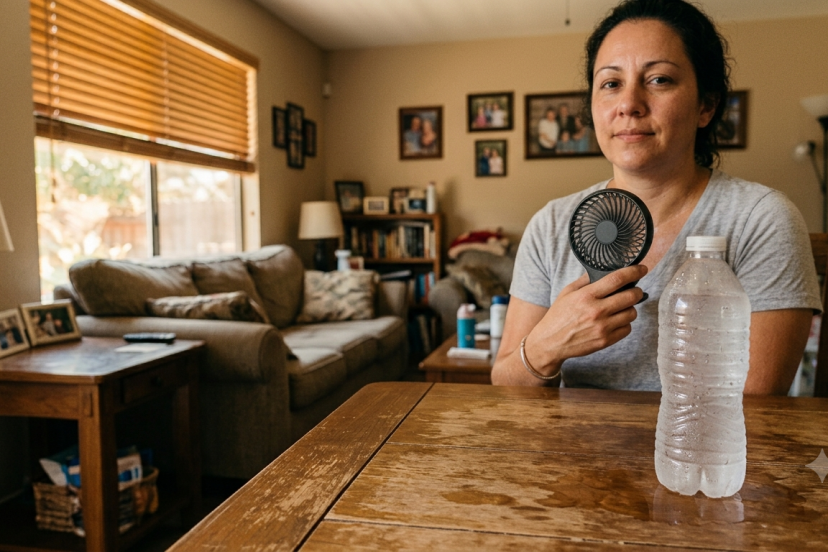
A battery-powered fan is the single highest-value item in a summer emergency kit. It doesn’t lower room temperature. Moving air across wet skin is what makes evaporative cooling possible. The CDC is explicit that fans alone don’t prevent heat illness. Paired with wet skin and shade, though, they’re a real tool rather than a placebo. Look for a fan with a battery in the 4,000mAh+ range for a full outage night — the Korbot 8-inch clip-on fan runs a 20,000mAh battery, well past that threshold.
👉 Korbot Clip-On Fan — US | CA
A portable power station keeps that fan (and your fridge, phone, and medical devices) running for days, not hours. This is the same category of gear covered in our EcoFlow vs. Jackery comparison — for a heat-specific outage, prioritize a unit with enough capacity to run a fan continuously overnight and recharge your phone and any medical equipment.
👉 Jackery Explorer 300 Portable Power Station
👉 EcoFlow DELTA 2 Portable Power Station
A portable AC unit is the step up if you can run one. EcoFlow’s WAVE series is built specifically to pair with their power stations. On a 5,100 BTU cooling mode it drops room temperature by roughly 18°F in minutes. That is genuinely closer to real air conditioning than any battery fan. The trade-off is a higher power draw.
👉 EcoFlow WAVE Portable Air Conditioner
A solar panel means you’re not stuck rationing power for one bad night — you’re set up for a multi-day outage. Daytime sun recharges your power station so the fan or AC can run again that evening.
👉 Jackery SolarSaga 100W Solar Panel
No-Power Cooling and Heat Blocking
A cooling towel is the cheapest, fastest relief in this whole list. Wet it, snap it a few times to activate the fabric’s evaporative technology, and it delivers noticeable cooling within the first five to ten minutes — ideal for anyone without access to a shower during an outage.
👉 FROGG TOGGS Chilly Pad Cooling Towel — US | FROGG TOGGS Chilly Pad Cooling Towel — CA
Reflective window film or blackout-backed curtains stop the heat problem before it starts, cutting radiant heat gain through south- and west-facing windows during peak sun hours.
👉 Gila Heat Control Platinum Window Film — US | CA
Staying Hydrated Without Overdoing It
Drink on a schedule — roughly a cup of water every hour during active heat exposure — rather than waiting until you’re thirsty, since thirst lags behind actual fluid loss. Heavy sweating also depletes electrolytes, not just water, so if you’re sweating for hours, plain water alone won’t fully replace what you’re losing. Electrolyte packets are shelf-stable, cheap, and worth keeping in the same bin as your other heat gear.
👉 Liquid I.V. Hydration Multiplier — US | CA
Avoid alcohol and excess caffeine during a heat emergency — both accelerate fluid loss at exactly the wrong time.
Who’s Most at Risk
Older adults, infants and young children, people with chronic illness or mental illness, outdoor workers, and anyone without reliable access to air conditioning face substantially higher risk during extreme heat. If you’re responsible for someone in a high-risk group, check on them at least twice a day during a heat emergency. Heat stress escalates faster than people expect. Confusion is itself a symptom, and it stops someone recognising they need help.
When to Leave Home for a Cooling Center
Riding it out at home isn’t always the safer call. Watch for one clear signal. If your indoor temperature climbs above roughly 90°F and you have no reliable way to bring it down, it is time to relocate. That means no working AC, no power for a fan, and no lower floor to retreat to. Don’t wait it out. Libraries, malls, and designated cooling centers all work; even a few hours in real air conditioning meaningfully helps your body recover before you’re back in the heat. This is especially true for high-risk household members, where the safer decision is often to leave early rather than test how bad it gets.
Building a No-AC Heat Emergency Kit
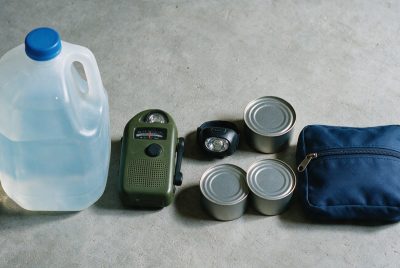
Keep a dedicated bin, and check it before peak summer. It should hold a battery-powered fan, a charged portable power station, and a portable solar panel. Add one or two cooling towels, electrolyte packets, and a case of bottled water sized to your household. Include a battery or hand-crank weather radio for heat advisories. Finally, print a list of nearby cooling centers. Don’t rely on your phone alone. If the outage is regional, cell towers get strained.
A Word of Encouragement
Heat emergencies are stressful, but they’re also one of the most preventable categories of disaster — nobody needs specialized training to keep their household safe, just a plan made before the thermometer climbs. If you’ve read this far, you’re already ahead of most households on your street. Put the kit together this week, not the week a heat advisory is already in effect, and you’ll be the calm one when it matters.
FAQ
Is it true that fans don’t actually help in extreme heat?
Fans alone don’t lower body temperature or prevent heat illness, and the CDC specifically warns against relying on them as your main cooling strategy above certain temperature and humidity thresholds. Paired with wet skin, shade, and hydration, though, a fan meaningfully improves evaporative cooling — it’s a supporting tool, not a replacement for a real cooling plan.
How hot does it have to be inside before it’s dangerous?
There’s no single universal cutoff. Still, indoor temperatures above 90°F with no reliable way to cool down are widely treated as the threshold for relocating to a cooling center. High humidity makes that threshold arrive sooner. The risk is highest for children, older adults, and anyone with a chronic health condition.
What’s the fastest way to cool down without a shower?
A cooling towel, wetted and snapped to activate, delivers the fastest noticeable relief of any no-power option, typically within five to ten minutes, though the effect fades within about 40 minutes and needs to be reactivated.
Can I run a portable AC unit on a power station during an outage?
Yes — units like the EcoFlow WAVE series are designed to pair directly with a compatible portable power station, though runtime depends on the power station’s capacity and how the outage affects your ability to recharge it via solar or grid power.
What are the first signs of heat exhaustion I shouldn’t ignore?
Headache, dizziness, nausea, heavy sweating, irritability, and reduced urination are early warning signs. If someone stops sweating, becomes confused, or loses consciousness, that’s heat stroke — call 911 immediately.
Trusted resources and related guides
Trusted external resources
Related SurvivalTactix guides
- Power Outage Preparedness: Your Complete Blackout Survival Guide
- Long-Term Water Storage: Essential Survival Guide
- Being Prepared for Emergencies: A Practical Guide
- Vehicle Emergency Kit: Roadside Preparedness
- Natural Disaster Survival: The Complete Guide
- Wildfire Smoke Preparedness: How to Keep Your Home’s Air Safe
Next step: Put your no-AC heat kit together this week, not the week a heat advisory is already in effect.